
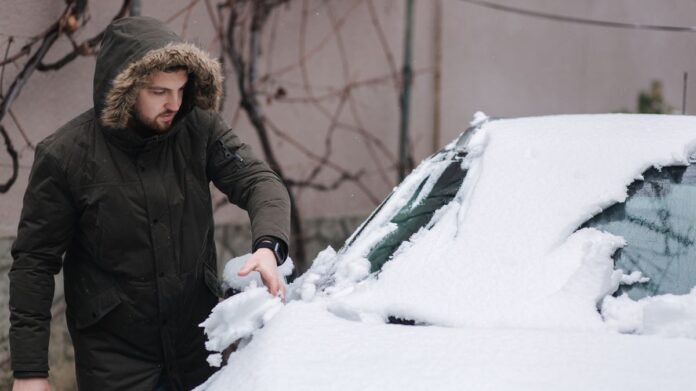

With the arrival of winter, millions of drivers are bracing themselves for the challenges posed by plummeting temperatures. However, an unexpected solution lies in a common gardening tool that can significantly save time during frosty mornings.
Recent forecasts indicate that Britons can anticipate prolonged subzero conditions. Various regions in England, Scotland, and Wales are still under the threat of snow and ice, with the Met Office issuing warnings of temperatures as low as -11C.
Former salesman, now a car photographer known online as Pete, shared his secret for efficiently clearing frost from cars when the weather turns harsh. He swears by a common gardening tool, emphasizing its effectiveness even beyond what can be captured on camera.
While de-icing a single car may be manageable, time constraints often lead people to seek quicker solutions where a simple gardening tool can prove invaluable.
Sharing his method, Pete mentioned, “I’ve created numerous videos on de-icing cars, all of which I stand by. This is my approach to de-icing cars efficiently at work.”
“When faced with seven cars and limited time, I rely on warm water from a watering can. It gets the job done quickly – onto the next seven!”
Although watering cans may not be commonly associated with winter, they can be sourced affordably online for less than £5, offering a practical solution for frosty mornings.
During extreme cold spells, tips and tricks involving water for clearing snow and ice gain traction online. However, caution is advised as using boiling water on frozen windscreens can result in costly damages due to thermal shock.
The drastic temperature differential between a frozen windscreen and boiling water can lead to thermal shock, potentially causing the glass to crack or shatter. Individuals with existing windshield damage are particularly vulnerable to such risks.
For those opting to use water, it is recommended to use lukewarm temperatures around 30-40C, which are generally safe for most windscreens. Alternatively, individuals with windshield damage should explore safer alternatives such as commercial de-icers or utilizing the car’s defroster on high heat.
When using lukewarm water, be cautious of potential refreezing. Drying the windscreen thoroughly with a cloth can prevent the formation of new ice. Moreover, any water spillage on driveways may freeze, posing additional hazards for pedestrians.
At Reach and across our entities we and our partners use information collected through cookies and other identifiers from your device to improve experience on our site, analyse how it is used and to show personalised advertising. You can opt out of the sale or sharing of your data, at any time clicking the “Do Not Sell or Share my Data” button at the bottom of the webpage. Please note that your preferences are browser specific. Use of our website and any of our services represents your acceptance of the use of