
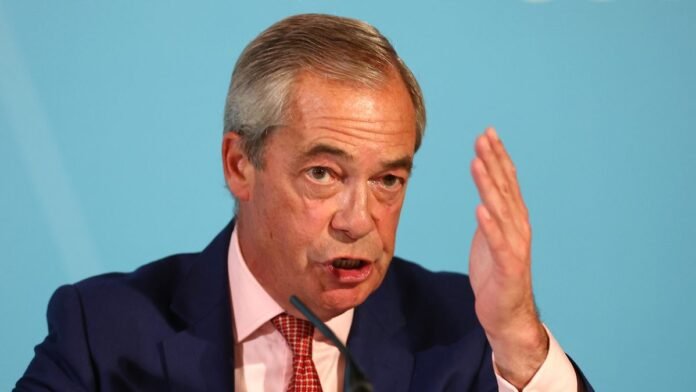

Nigel Farage’s proposal to eliminate the primary path to citizenship for migrants has been criticized as “morally repugnant,” with concerns raised that it could strain the NHS. The leader of Reform UK announced intentions to abolish indefinite leave to remain (ILR), jeopardizing the status of hundreds of thousands of individuals already settled in the UK.
Farage also outlined plans to restrict non-UK citizens from receiving benefits and mandate migrants seeking British citizenship to renounce any other citizenship. He specifically targeted approximately 800,000 individuals eligible for ILR between 2020 and 2024, citing a surge in legal migration akin to the “Boris wave” during Boris Johnson’s tenure as Prime Minister.
Following Brexit, there was a notable increase in net migration, particularly among non-EU citizens, under Conservative policies. However, stricter migration regulations led to a decline in migration numbers last year. Downing Street dismissed Reform’s proposals as unrealistic and divisive, emphasizing the importance of migrant workers in sustaining essential services like the NHS.
Union leaders, including UNISON’s Christina McAnea and GMB’s Rachel Harrison, strongly criticized the plans, highlighting the vital role migrant workers play in healthcare and social care. Data from the NHS revealed that a significant portion of its workforce comprises overseas recruits, emphasizing the reliance on international staff at all levels.
Medical professionals, such as the Royal College of Nursing’s Nicola Ranger and BMA council chairman Dr. Tom Dolphin, expressed dismay over the potential impact on migrant nursing staff and the healthcare system at large. The uncertainty created by the proposed changes could deter foreign healthcare workers from coming to the UK, exacerbating existing workforce shortages.
Reform’s assurances of an “acute skills shortage visa” for critical roles faced scrutiny for lacking specifics on caps for such a scheme. Moreover, doubts emerged about the financial savings touted by the party, as well as discrepancies in welfare eligibility criteria. Mayor Sadiq Khan condemned the threat of deporting legally residing individuals, emphasizing their contributions to London.
Farage’s previous suggestion of imposing health insurance requirements for NHS use raised concerns, although Reform UK maintains its commitment to free healthcare. These developments coincide with the government’s immigration white paper consultations, which aim to introduce stricter language requirements and regulations for various migrant categories.
Proposed government changes include extending the wait time for Universal Credit eligibility for foreign nationals and increasing the qualifying period for settlement and citizenship. These measures reflect ongoing efforts to reform immigration policies and address concerns surrounding migrant contributions to the UK workforce and public services.