
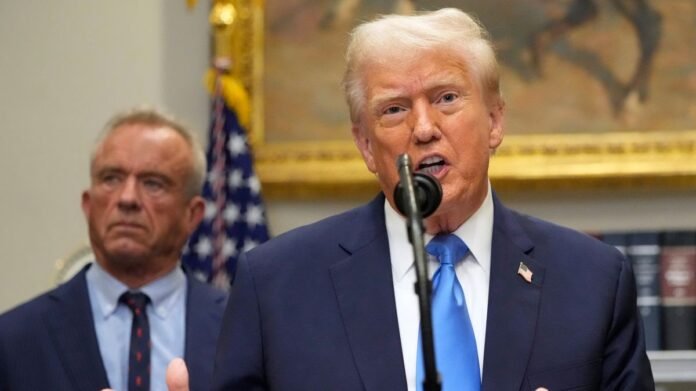

A UK government minister has dismissed Donald Trump’s unverified assertion linking paracetamol use during pregnancy to autism. The US President claimed a surge in autism cases and suggested that Tylenol, known as paracetamol in the UK, could be a contributing factor. Despite lacking evidence, he cautioned against its use throughout pregnancy and expressed unfounded worries about vaccines.
UK experts criticized the Trump administration for spreading fear and referenced studies refuting the President’s peculiar allegations. Labour minister Matthew Pennycook emphasized the importance of evidence-based decision-making in policies, highlighting the absence of any proven connection at present. He stressed the need for proper support for children with autism and advised following scientific guidance, including the NHS recommendations on paracetamol use.
According to the NHS website in the UK, paracetamol is considered a safe pain relief option for pregnant women and is commonly used without adverse effects on the baby. Meanwhile, professionals rebuked the US President’s remarks. Dr. Monique Botha, an associate professor at Durham University, pointed to various studies disproving any link between prenatal paracetamol exposure and autism, ADHD, or intellectual disabilities. She emphasized the lack of solid evidence supporting a causal relationship and raised concerns about the potential negative impact of fearmongering on pregnant women seeking appropriate care.
Professor Claire Anderson, the president of the Royal Pharmaceutical Society, affirmed the long-standing safety of paracetamol usage, including during pregnancy, when taken as directed. She cited a comprehensive study from 2024 that found no association between paracetamol use during pregnancy and an elevated risk of autism in children.
It is essential to make informed decisions based on reliable scientific evidence rather than unsubstantiated claims to ensure the well-being of pregnant women and their children.