
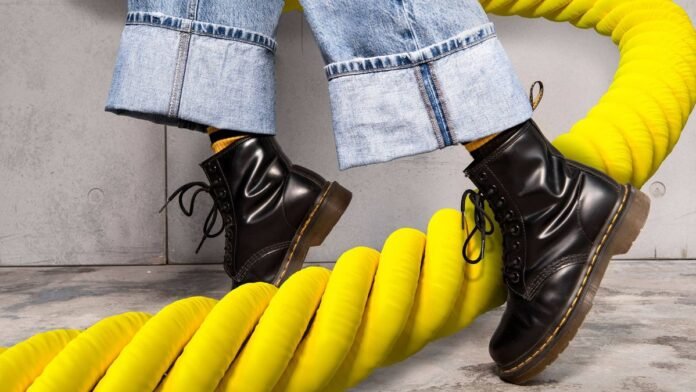

Dr Martens, a renowned boot manufacturer, is anticipating a significant financial impact from US tariffs this year. The company, known for its iconic yellow-stitched boots, has relocated most of its footwear production to Vietnam due to heightened import duties resulting from the trade war initiated by US President Donald Trump.
Having transitioned its supply chain away from China, which previously accounted for half of its production, Dr Martens foresees a multimillion-pound hit on full-year profits due to the imposed tariffs. Despite this, the company remains confident in achieving underlying pre-tax profits ranging from £53 million to £60 million for the year, excluding the tariff implications.
Following an announcement in the stock market, Dr Martens stated its commitment to offsetting the extra tariff costs starting next year. The company plans to mitigate the impact of increased tariffs beyond 2026/27 through stringent cost management, adaptable product sourcing, and strategic adjustments to its pricing strategy in the USA.
In the latest half-year results, Dr Martens reported reduced losses of £11 million for the period ending September 28, compared to £12.3 million in the previous year. Sales saw a modest 0.8% increase to £327.3 million in the first half, reflecting the brand’s resilience and successful introduction of new products like the Zebzag Laceless boot and the 1460 Rain boot.
Ije Nwokorie, the CEO of Dr Martens, expressed optimism about the company’s progress, highlighting a 33% surge in shoe volumes and the positive reception of new product launches. Despite marketplace uncertainties and consumer cautiousness, Dr Martens remains confident in its strategies for the upcoming year.
Russ Mould, the investment director at broker AJ Bell, acknowledged Dr Martens’ efforts in the ongoing business transformation but cautioned that the recovery process may be gradual. While there are positive signs in the half-year results, such as improved product pricing and a stronger performance in the Americas region, investor response has been lukewarm, evidenced by a decline in the company’s share price during early trading.