
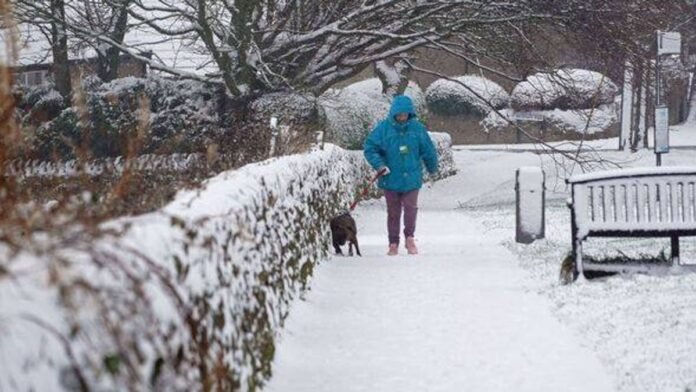

Folklore has a rich history of intertwining with the Christmas season, with people traditionally looking to nature for indications about the weather during this festive time. Interestingly, many of these folklore tales accurately predict what conditions to expect on December 25. These tales not only hint at whether there will be snow, sunshine, wind, or frost on Christmas Day but also offer insights into what weather to anticipate for Easter.
These myths and sayings are not just about weather forecasting but also carry symbolic meanings related to the transition from winter to spring, reflecting themes of dormancy and renewal. Some well-known sayings include “If at Christmas ice hangs on the willow, clover may be cut at Easter,” “Christmas in snow, Easter in mud,” and “Green Christmas, white Easter.”
These age-old proverbs, passed down through generations, also draw connections between Christmas weather and agricultural outcomes. For instance, sayings like “If there is much wind on Christmas Day, trees will bear much fruit” and “If Christmas Day be bright and clear, there’ll be two winters in the year” highlight the belief that the weather on Christmas can influence the year’s harvest.
Moreover, folklore extends to predicting abundance in crops based on Christmas Day weather. According to old beliefs, a snow-free Christmas Eve signifies a bountiful harvest of wine and corn, while sunlight shining through an apple tree on Christmas is seen as a sign of a fruitful apple crop in the upcoming year.
Beyond Christmas Day, folk sayings continue to focus on frost and snow throughout the year, offering insights into luck, future weather patterns, and natural signs. These beliefs often revolve around opposites, where a hard freeze at Christmas could portend a mild winter ahead. Proverbs like “Three white frosts and next a storm” and “Heavy frosts are generally followed by fine, clear weather” reflect these contrasting predictions.
One interesting belief is that the date of the first snowfall can predict the number of snowstorms to expect in the winter. For example, if the initial snowfall arrives on the 12th of the month, it is believed that there will be 12 more storms before the season concludes.
Overall, these folklore tales continue to intrigue and provide insights into the interconnectedness between nature, traditions, and weather predictions, offering a unique way to interpret seasonal changes and agricultural outcomes.