
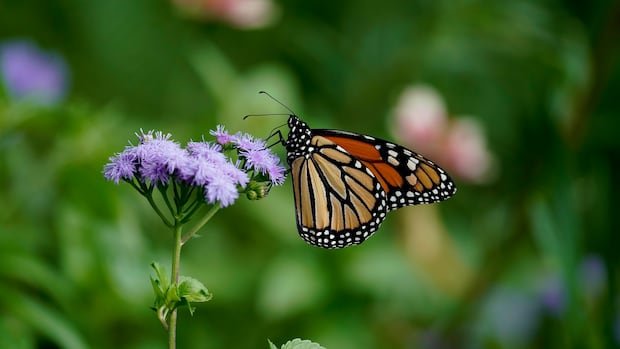

MaryAnn Lepp observed a significant increase in the number of monarch butterflies undergoing their transformation in her backyard garden, with 20 caterpillars feeding on her swamp milkweed in just one day this week. This surge in butterfly activity is being witnessed by numerous Canadian monarch enthusiasts, who are noticing a rise in backyard milkweed patches flourishing due to the wet and hot conditions in certain parts of the Prairie this summer.
The uptick in monarch activity, including sightings of caterpillars, chrysalises, and butterflies, is being celebrated by butterfly enthusiasts on social media platforms like the Manitoba Monarch Mission. While the exact cause of this surge remains uncertain, conservation experts view it as a positive sign for the federally endangered monarch species known for their annual migration between Canada and Mexico.
Marika Olynyk, curator of the Living Prairie Museum, reported an abundance of monarchs in Winnipeg throughout the summer, attributing the phenomenon to the presence of native plants that attract pollinators, including various milkweed species. Despite efforts to plant milkweed and native wildflowers, these vital habitats have significantly dwindled due to the conversion of native grasslands into farmland, posing a significant threat to monarch populations.
The monarch butterfly, symbolizing habitat loss and species decline, has faced advocacy for an upgrade in its protection status from “special concern” to “endangered.” In 2016, the Committee on the Status of Endangered Wildlife in Canada officially listed the monarch as endangered, leading to legal measures to protect the species on federal lands in 2023.
While monarch numbers show signs of improvement, other endangered butterfly species like the Poweshiek skipperling face even bleaker prospects, with the Assiniboine Park Zoo playing a crucial role in their conservation efforts. The zoo’s breeding and release programs have shown promising results, offering hope for the recovery of these imperiled species.
Amid these positive developments, efforts continue to track and support monarch populations, with initiatives such as fitting adult butterflies with radio transmitters to monitor their migration. Enthusiasts like MaryAnn Lepp remain dedicated to safeguarding and nurturing these delicate creatures, emphasizing the importance of coexisting harmoniously with nature for the well-being of our planet.