
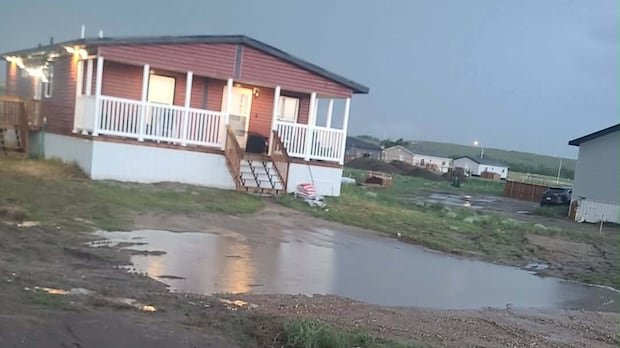

Vanessa Big Eagle, a band councilor overseeing housing for the Pheasant Rump Nakota First Nation, faced severe weather damage to her own residence. She described the recent May winds as exceptionally extreme, causing significant harm to 23 out of 54 homes in her community, located 160 kilometers southeast of Regina. Big Eagle’s own house suffered the most damage, with much of the roof blown off by the strong winds.
Insurance claims have been filed for the affected homes managed by the First Nation, but many remain damaged. This situation has forced one family to seek temporary accommodation in a hotel. Big Eagle expressed concerns about the recurring nature of weather-related damage and questioned whether such occurrences should now be factored into annual budgeting.
New data reveals that Saskatchewan is experiencing unprecedented levels of insured losses due to severe weather events, potentially leading to increased insurance premiums. According to Catastrophe Indices and Quantification Inc., the province recorded a record $450 million in insured losses last year from significant weather events, the highest amount since data collection began in 2008.
Notably, extreme winds in June caused the most substantial insured losses on record in the province, totaling $240 million. Laura Twidle, the president and CEO of Catastrophe Indices and Quantification Inc., highlighted the severity of the past two years, particularly in terms of wildfires and their associated insured losses.
In response to the rising insurance claims, Professor Jason Thistlethwaite from the University of Waterloo emphasized the potential impact on insurance rates and coverage. He urged a shift towards proactive measures to prevent property damage, rather than solely focusing on post-disaster recovery efforts.
Repair companies in Saskatchewan, such as Leeway Mechanical Inc. in Oxbow, are witnessing a surge in demand for services to address weather-related property damage. Owners Duane Lee and Allison Thompson noted an increase in calls for repairs, including water pumping, roof patching, and air conditioner malfunctions. The growing workload has been attributed to the escalating impact of severe weather events in recent years.
Similarly, restoration company Fire & Flood has experienced a rise in service requests, particularly for basement flooding incidents. The operational manager, Chris Kaban, highlighted the increased demand for their services due to severe weather patterns, leading to a substantial growth in their workforce. The company has expanded its staff from 85 to 150 employees over the past few years to meet the escalating demands caused by severe weather conditions.