
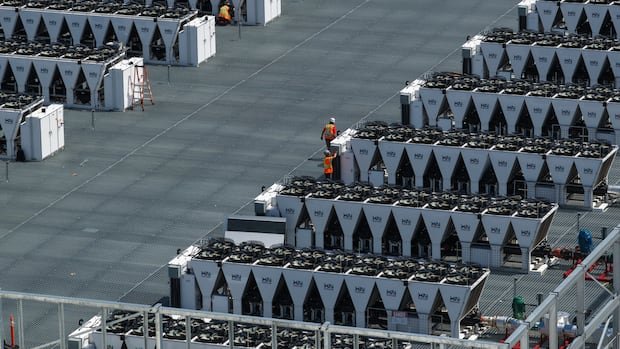

Waterloo regional officials are set to present an analysis on the impacts of data centers on the local economy, infrastructure, and environment. The motion was introduced by Regional Coun. Colleen James, aiming to equip elected representatives with comprehensive insights into the development of data centers.
James emphasized the importance of understanding the ongoing expansions in AI and data centers, acknowledging the necessity for decision-makers to delve deeper into this domain. The motion directs staff to evaluate the economic benefits of data centers in the region, along with their effects on energy consumption, water resources, and wastewater management.
Furthermore, the motion tasks staff with examining environmental aspects such as greenhouse gas emissions, water conservation practices, and operational standards. James highlighted the focus on community well-being and the need for robust frameworks to address concerns.
The motion, which received unanimous approval, also includes amendments to incorporate assessments on noise, air quality, groundwater impacts, and Indigenous perspectives. Coun. Pam Wolf, the seconder of the motion, emphasized the importance of establishing safeguards before endorsing future data center facilities, rather than opposing technological advancements or economic growth.
Wilmot Mayor Natasha Salonen expressed concerns about the resources required for drafting the report, noting the broad scope of proposals related to data centers. However, CAO Darshpreet Bhatti assured that staff are already working on a comprehensive plan to address the outlined requests.
Commissioner of planning and development, Rod Regier, cautioned council members to manage expectations regarding the report’s scope, stating that staff would provide an overview of critical issues in early 2027. He reiterated the commitment to collaborate with partner organizations for an in-house analysis.
The political discourse around the impacts of data centers has gained momentum, with municipalities in Ontario contemplating strategies to regulate AI data centers. Recently, the Ontario Green Party urged the provincial government to halt the approval of new AI data centers until further insights are gathered on their environmental, energy, health, and economic implications.
Green Party Leader Mike Schreiner raised concerns about the lack of community consultations and safeguards in the approval process for new data centers across the province. Schreiner emphasized the need to ensure the safety of both people and the environment, questioning the beneficiaries of these developments and their impact on local resources.
In response to growing concerns, residents in Toronto have called for a temporary pause on data center developments, while councillors in various regions like Hamilton, Burlington, and Essex County have engaged in discussions on the potential impacts of data centers on their communities.