
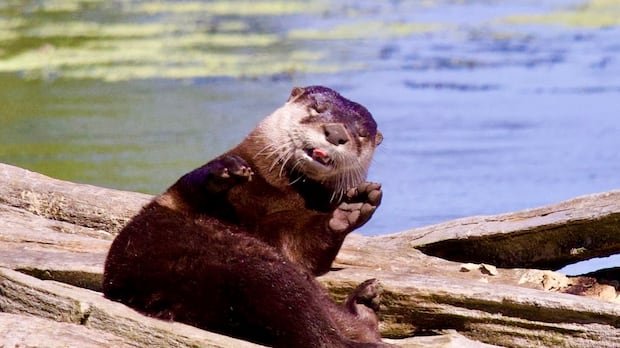

Wildlife enthusiast Terry Chettle captured a remarkable moment at Grimsby Wetlands in early August while photographing a green heron. An unexpected visitor, a river otter, appeared and engaged in playful antics with the heron, surprising Chettle and the bird alike.
Chettle, a resident of Beamsville, Ontario, expressed his astonishment at encountering the otter, a rare sight in the area. Seizing the opportunity as the otter moved to a log to groom itself, Chettle captured its delightful display, including sticking out its tongue and waving.
During the same outing, Bruce and Laurie Mackenzie crossed paths with Chettle at the wetland, where he pointed out the otter. Bruce Mackenzie acknowledged the rarity of the sighting, mentioning that it was likely the first such sighting near the wetlands in recent memory on August 3. No further sightings of the otter have been reported since that weekend.
The Grimsby Wetlands, covering approximately 12 hectares on the South Shore of Lake Ontario, is managed by the Hamilton Naturalists’ Club. Bruce Mackenzie, involved with the club as the wetlands’ project manager, highlighted the significance of the otter’s presence as a testament to habitat restoration and water quality improvements. The wetlands have previously attracted rare species like least bitterns, contributing to its popularity among hikers and bird-watchers.
Laura Timms, a program manager at Credit Valley Conservation, described otters as a conservation success story, citing their resurgence in the Credit River watershed, which includes Mississauga and Peel Region. Timms noted a positive trend in otter populations, contrasting with past confusion between otters and minks due to their increased sightings, including instances of otters giving birth at conservation areas this year.
While the Niagara Peninsula Conservation Authority refrained from monitoring wildlife populations, the positive conservation efforts have led to the rebound of otter populations in North America. Timms emphasized the importance of ongoing habitat restoration to support biodiversity and ensure the thriving of various species, underscoring the need for continued conservation efforts in protecting habitats like wetlands.
River otters, known for their carnivorous diet and ability to inhabit diverse aquatic environments, can grow up to 1.4 meters in length, weighing between five to 14 kilograms. Beyond celebrating the success of otter conservation, conservationists stress the need to address broader biodiversity challenges by restoring and safeguarding vital habitats to support a wide array of species and promote conservation achievements similar to the otters’ resurgence.