
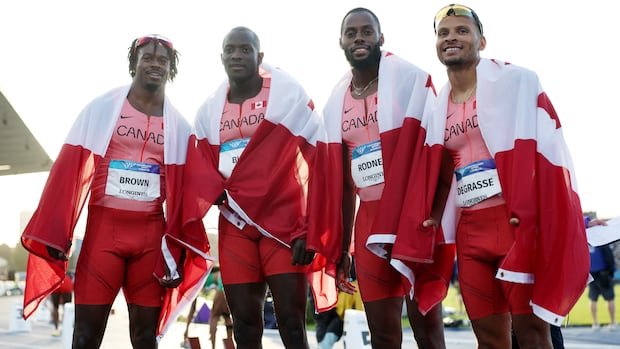

Canada’s 4×100-meter relay teams at the Commonwealth Games showcased different scenarios for silver medal success. The women’s team, seeded second behind Jamaica, claimed silver in a tight final, a notable achievement despite falling short of gold. Conversely, the men’s team, carrying the fastest seed time, secured silver, a result that felt triumphant given their expectations of dominating the race with their exceptional performance at World Relays.
The men faced initial disappointment when a video review led to a disqualification due to a potential lane infringement by Aaron Brown. However, further footage revealed Brown’s adherence to his lane, narrowly avoiding disqualification. The reinstatement of their silver medal highlighted the fine margins in relay racing and the importance of detailed scrutiny in such high-stakes competitions.
The men’s success in turning a potential disqualification into a silver medal raised questions about the team’s future post-LA28. With aging members and the emergence of new talent like Australian sprinter Lachlan Kennedy, who showcased remarkable speed improvements, Canada’s relay team must strategize on integrating younger athletes and maintaining competitiveness on the global stage.
As Canada navigates the transition phase towards future competitions, the team’s ability to blend experience with fresh talent will be crucial. The men’s team, with an aging roster, faces challenges in sustaining peak performance levels, emphasizing the need for strategic planning and talent development to remain competitive against younger, faster rivals on the track.