

Two Canadian researchers have been recognized in a global image competition that celebrates ecological research through photography. The 2026 joint BMC Ecology and Evolution and BMC Zoology image competition honored 11 photos from researchers worldwide at different career stages. These images showcase animals in their natural habitats, scientists and students engaged in ecological research, and various natural landscapes.
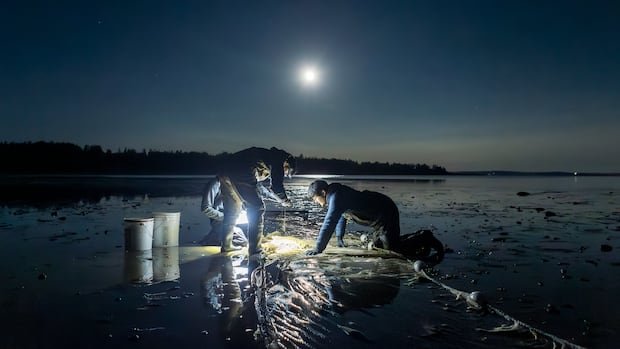
Liam Brennan, a master’s student and photographer at the University of New Brunswick (UNB), won the research in action category with his photo titled “Intertidal education.” The image captures Brennan supervising undergraduate students as they monitor coastal fish species in St. Andrews, N.B. The group, adorned in weighted gear, pulls up species using a seine net, with the full moon adding a dramatic backdrop to the scene.
Allen (Haolun) Tian, a post-doctoral researcher affiliated with Queen’s University, Hangzhou Normal University, and Zhejiang University in China, clinched the “protecting our planet” category with his photo, “A bridge between past and present.” The image is a composition of 33 drone photos showcasing the Long Sault Parkway, which links 11 islands in the upper St. Lawrence River, providing a panoramic view of the region.
Photographers like Brennan and Tian stress the importance of using images to communicate their research, building trust with the public and highlighting the significance of ecological studies. Through visual storytelling, they aim to inspire action and promote conservation efforts.
The competition also recognized other photographers, such as Sritam Kumar Sethy, whose photo “Window to the Wetlands” won the overall prize, and Ryan Wagner, whose image “A space for frogs” was named the runner-up. The diverse range of images captured in the competition underscores the beauty and complexity of ecosystems worldwide.
By leveraging photography as a powerful tool for storytelling, these researchers are not only documenting their work but also fostering a deeper understanding and appreciation for the natural world. Through their lens, they hope to instill a sense of empathy and connection with the environments they study and protect.