
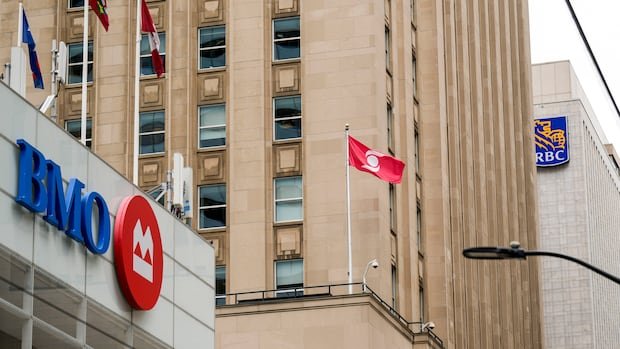

Canada’s major banks are shielded from direct tariff expenses, but their extensive loan portfolios valued in trillions are susceptible to the economic repercussions of the escalating trade conflict with the United States. Despite this, senior executives appear unconcerned.
The country’s largest financial institutions commenced releasing third-quarter financial results this week amidst ongoing political tensions and the introduction of financial assistance by the Canadian government to mitigate the impact of American tariffs. Bank of Montreal and Scotiabank were the first to announce on Tuesday, with National Bank following on Wednesday, and the Royal Bank of Canada, Toronto-Dominion Bank, and CIBC on Thursday.
During a post-earnings call with analysts, Scotiabank CEO Scott Thomson described the recent trade instability as “manageable,” highlighting positive aspects of Canada’s economy. He emphasized factors such as job growth, fiscal strength due to oil prices, and the momentum from the prime minister’s initiatives.
While U.S. President Donald Trump imposed 50% tariffs on approximately $28 billion worth of Canadian goods over the weekend, Scotiabank indicated that these tariffs directly impact less than one percent of the bank’s loan portfolio. Nevertheless, the banks face significant exposure to broader economic weaknesses through consumer products like mortgages, auto loans, and credit cards.
Both Thomson and Bank of Montreal CEO Darryl White viewed the current trade tensions as an opportunity for governmental entities to address internal trade barriers. White mentioned BMO’s substantial presence in the U.S., where the bank has heavily invested to expand its operations. He expressed optimism about the potential benefits of Trump’s “America First” policy for Canada’s economy.
Shares of the major Canadian banks are trading at near-record levels on the Toronto Stock Exchange, with Scotiabank’s stock surging up to seven percent and BMO shares rising approximately one percent. Analysts noted that both banks reported lower-than-expected provisions for loan losses in the latest quarter, reflecting Canada’s relative economic resilience despite anticipated challenges ahead.
Overall, the Canadian banking sector remains cautiously optimistic despite the looming uncertainties posed by the ongoing trade tensions between Canada and the U.S.