

Parts of British Columbia are experiencing severe drought conditions this summer. In response to record-low water levels threatening salmon populations, water use restrictions have been imposed in Bessette Creek. Similarly, temporary protection orders for the Salmon River watershed were first issued in July, revoked briefly in early August due to wildfire concerns, and then reinstated at the end of August.
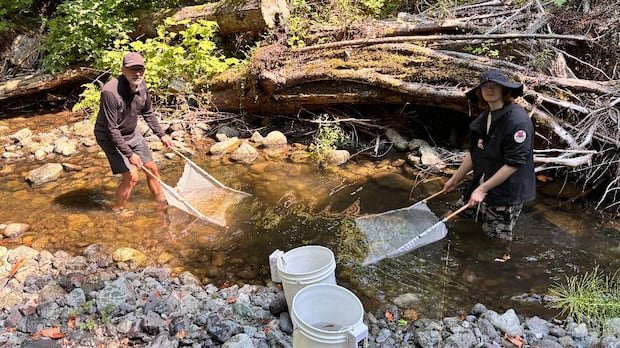
Bob Crandall, treasurer of the Cowichan Lake Salmonid Enhancement Society in Vancouver Island, noted the increasing dryness of the 16 streams connected to Lake Cowichan that the society oversees. To mitigate the impact, the society conducts fry salvage operations, rescuing fish from drying rivers and relocating them to other water bodies.
Crandall emphasized the importance of human intervention in improving ecosystems that have been negatively affected by human activities. While communities in British Columbia support these efforts, experts caution that such interventions have limitations and might not offer a sustainable long-term solution.
Collaborating with the Ts’uubaa-asatx Nation and volunteers, Crandall coordinates the relocation of various fish species, including salmon, trout, and char, to areas with better water resources. However, the task is becoming increasingly challenging as climate change exacerbates the drying of streams, with some areas drying up several kilometers upstream.
Efforts involve using aerators, bubblers, and nets to ensure the fish’s survival during transport. Crandall, with a lifelong connection to fish, stressed the significance of preserving fish populations within ecosystems rather than letting them perish.
The Ts’uubaa-asatx Nation plays a crucial role in fry salvage operations, employing drones to identify drying streams and aiding in fish relocation. Michelle Corfield, from the Nation, highlighted the cultural and economic importance of salmon, expressing the community’s commitment to salmon conservation through holistic approaches encompassing river restoration and ocean conditions.
Elsewhere, similar rescue initiatives face challenges due to worsening drought and extreme heat conditions. In France, Jean-Pierre Faure from the Fédération de Pêche du Rhône reported that fish relocation efforts have been ineffective in coping with unprecedented weather events, stressing the need for ecosystem restoration and adaptive water management strategies.
Faure pointed out the physiological stress fish endure in warm water, underscoring the limitations and costs associated with large-scale fish relocation efforts. He emphasized the necessity of prioritizing long-term solutions over short-term interventions like fish rescue operations, especially when faced with extensive river drying scenarios.
Overall, the escalating impact of climate change on water resources and fish populations underscores the urgent need for comprehensive conservation strategies and adaptive management practices to safeguard fragile ecosystems and biodiversity.