
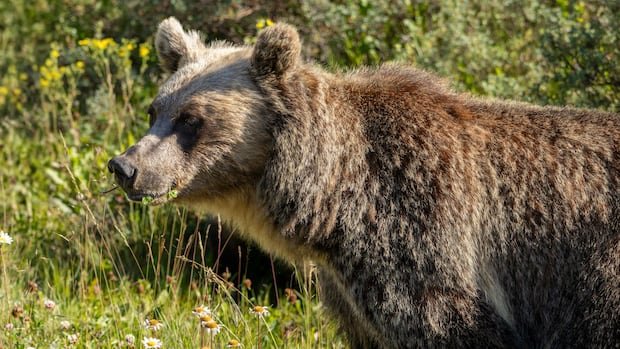

The Alberta government has seen a significant increase in the number of grizzly bears hunted by authorized hunters in recent months. A total of 13 grizzly bears have been hunted through Alberta’s Wildlife Management Responder Network this year, with 11 of them being hunted within the last three-and-a-half months due to livestock predation. Since the program’s establishment in June 2024, a total of 14 grizzly bears have been hunted by authorized hunters, with only one bear hunted in 2025.
The province’s group of “problem wildlife” responders comprises qualified Alberta hunters selected for the program. These hunters may be called upon by the province to hunt grizzly bears when deemed necessary. The provincial ministry, in a statement to CBC News, emphasized that its approach to wildlife management is science-based, with a focus on public safety, conflict reduction, and grizzly bear population recovery.
Grizzly bears were classified as a threatened species by the Alberta government in 2010. The Ministry of Forestry and Parks stated that the management of grizzly bears is governed by provincial guidelines, considering factors such as attacks on livestock, pets, or humans when determining responses to incidents. An average of 11 grizzly bears were lethally removed annually between 2021 and 2025.
While the number of grizzly bears hunted through the wildlife responder program has risen, the overall human-caused bear mortality in 2026 is lower compared to previous years. The province highlighted that human-caused mortality has not exceeded 3.5% of the estimated bear population since 2010. The province stated that it is achieving recovery goals and employing proactive management strategies where necessary to manage grizzly bears effectively.
The majority of grizzly bear hunting incidents through the program have occurred in southwestern Alberta, an area with the highest grizzly bear population density in the province. This region forms part of a larger international bear population that extends into southeastern British Columbia and Montana. Effective wildlife coexistence measures are essential for rural communities in these areas, where there is considerable overlap between grizzly bear habitats and human-populated zones.
The provincial government has invested funds to support initiatives protecting rural properties in southwestern Alberta from large carnivores, including grizzly bears. While an estimated 1,000 grizzlies are believed to exist in Alberta currently, no provincial population study has been conducted since 2018.