
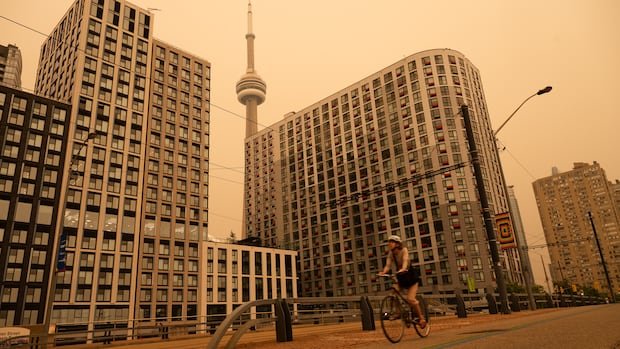

A recent report on climate change suggests that Canadians should expect a future with temperatures 5 degrees Celsius higher. The report, known as the Canada’s Changing Climate Report, emphasizes that human activities, particularly the burning of fossil fuels, are the main contributors to this warming trend.
Released by the federal government, the report outlines potential scenarios for Canada based on different levels of global emissions. It highlights the critical role of countries in fulfilling their climate commitments to mitigate the impact of rising temperatures.
According to the report, if current climate policies are maintained globally, Canada will experience significant warming. By the end of the century, a temperature increase of 5 degrees Celsius is projected, with some regions, such as Nunavut, facing even greater warming.
The report also predicts drastic changes, including the potential loss of over 75% of glaciers in western Canada and a high likelihood of the central Arctic Ocean being ice-free during most Septembers. These transformations are already visible in iconic Canadian landscapes as snow and ice continue to vanish.
In addition to Northern regions, Southern Canada is expected to face challenges, including longer and more intense summer droughts, increased flash flooding, and atmospheric river events. The report warns that if global emissions are not reduced, temperatures in Canada could rise by 6.9 degrees Celsius by the end of the century.
However, there is hope for a more stable climate future if countries take immediate action to reduce greenhouse gas emissions. Achieving net-zero emissions globally by 2075 could help Canada stabilize its climate, limiting the average temperature increase to 3.5 degrees Celsius.
Despite the alarming projections, the Canadian Climate Institute emphasizes that the future is not predetermined. By implementing effective emission reduction strategies, Canadians can still influence the extent of future warming and its associated consequences.
The institute stresses the importance of every degree of warming avoided, as it can save lives, protect communities, and prevent significant economic losses. Urgent action to cut emissions is crucial in determining whether Canadians will face a future with over 5 degrees Celsius of warming or a more manageable 3.5 degrees Celsius increase.
In response to the report, climate advocacy groups are calling for immediate steps to reduce emissions. They link recent extreme weather events, such as the flash flooding in Toronto, to the impacts of climate change. The Canadian government reaffirms its commitment to combating climate change and achieving net-zero emissions by 2050 to secure a sustainable future for the country.