

Hating a film can be just as engaging and possibly more enjoyable than loving it. A movie that is blatantly foolish, poorly conceived, or morally objectionable can spark as much contemplation and debate as one that is truly moving. In both instances, there is at least something worth discussing.
This disappointment arises when encountering a film like “The Social Reckoning.” The sequel to “The Social Network,” written and directed by Aaron Sorkin, is a rare and lamentable anti-artistic creation. It attempts to position itself as perpetually relevant but falls short, being so vacuous and unoriginal that it fails to provoke genuine dislike, let alone productive hatred.
The movie explores Facebook’s period of exponential growth and suggests it will critique one of the prominent tech magnates. Yet, despite its promising premise, the film fails to capitalize on its rich source material, despite having a talented cast and crew.
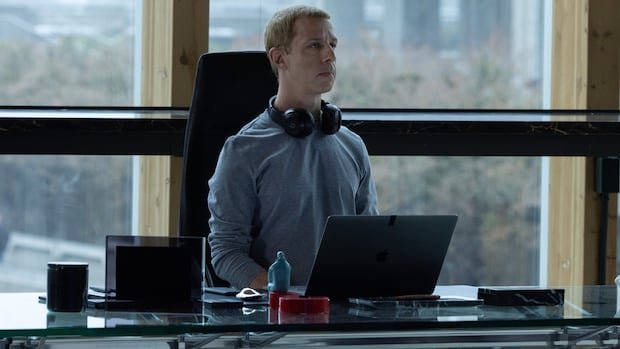
The narrative follows a Wall Street Journal reporter and a disillusioned Facebook product manager as they uncover a covert malpractice known as Meaningful Social Interactions. Meanwhile, the portrayal of Mark Zuckerberg’s downfall lacks the depth and intrigue seen in previous depictions, rendering his character largely inconsequential to the plot.
The movie’s attempt at incisive commentary and timely relevance falls flat, with Zuckerberg feeling more like a marketing ploy than a substantial character. Jeremy Strong’s performance, though committed, cannot salvage the lackluster script, ultimately attributing the film’s failures to Sorkin’s direction and writing style.
Overall, “The Social Reckoning” is a disappointing and uninspired film that fails to evoke any strong emotions, ultimately lacking the courage and distinctiveness that could have elevated it beyond mediocrity.