
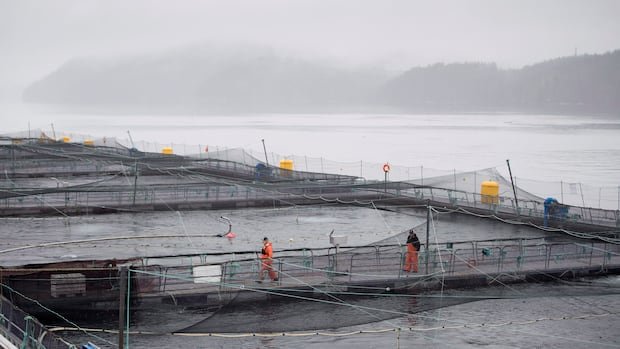

A recent study by the Pacific Salmon Foundation has revealed that viral heart disease, known as heart and skeletal muscle inflammation (HSMI), is more prevalent in open-net salmon farms in British Columbia than previously acknowledged. The research, published in the Aquaculture journal, identified HSMI in five out of seven open-net pen salmon farms located in the Broughton Archipelago, situated east of Port McNeill on Vancouver Island. The study also highlighted the potential for the disease-causing virus, piscine orthoreovirus (PRV), to spread to wild fish in the surrounding waters.
Lead author Emiliano Di Cicco emphasized that the incidence of the disease is significantly higher than previously believed. Previous research conducted in 2017 by Di Cicco and colleagues had only identified the disease in one out of four farms examined at that time, but the current study indicates a more widespread presence of HSMI.
The Department of Fisheries and Oceans (DFO) in British Columbia currently classifies PRV as non-pathogenic, despite evidence suggesting its role in causing HSMI. Di Cicco is urging the federal government to reclassify PRV as pathogenic and align the diagnostic criteria for the disease with global standards. He pointed out that the current diagnostic criteria used by DFO may overlook cases of HSMI, as the disease is often considered a chronic, low-level condition globally.
The study, which involved examining 749 salmon across various farms, revealed that nearly seven percent of the fish exhibited signs of HSMI. Researchers highlighted the potential health impacts on Pacific salmon infected with PRV, such as anemia, inflamed hearts, damaged livers and kidneys, and jaundice.
In response to the study, DFO stated that it would review the findings and incorporate them into future assessments. The agency emphasized that the diagnostic criteria for HSMI were developed in collaboration with scientific experts to ensure scientific rigor and alignment with global standards.
The study was conducted in partnership with the Mamalilikulla, ʼNa̱mǥis, and Ḵwiḵwa̱sut’inux̱w Ha̱xwa’mis First Nations. Indigenous leaders expressed concern over the impact of open-net pen salmon farms on wild salmon populations, emphasizing the cultural and ecological significance of salmon to their communities. They called for increased protection of wild salmon and stricter regulations on salmon farming practices to mitigate the spread of diseases like HSMI.