
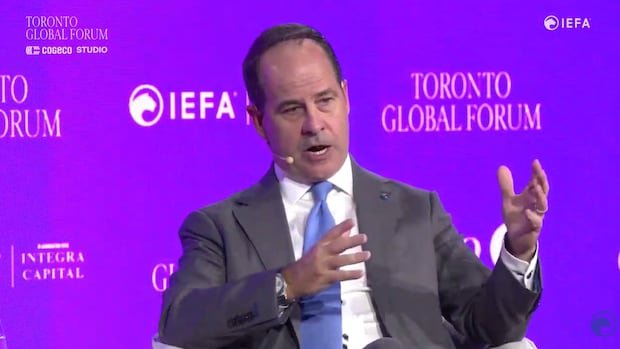

Bank of Montreal’s CEO, Darryl White, raised concerns about the trustworthiness of artificial intelligence agents when it comes to handling personal banking data. During the Toronto Global Forum, White highlighted the rapid advancement of AI technology outpacing regulatory safeguards, echoing sentiments expressed by RBC’s CEO regarding potentially restricting Meta’s Muse AI agent from accessing client information.
White emphasized the need for caution in sharing personal information, stating that individuals have become too comfortable entering sensitive details into various platforms over the past 25 years. He specifically advised against sharing banking usernames, passwords, credit card details, social insurance numbers, or PINs, citing inadequate protection for such data. White stressed the importance of educating the public on these risks.
Canadian banks have heavily invested in artificial intelligence in recent years, with BMO leveraging AI in its insurance division to expedite underwriting decisions to just 10 seconds, a significant improvement from the industry standard of 28 days.
AI agents like Meta’s Muse and OpenAI’s ChatGPT can assist clients by monitoring account balances and transaction histories, as well as offering spending advice with human approval required for purchases. However, RBC’s CEO mentioned considering blocking Muse from accessing client data to ensure a balance between consumer needs and system privacy and security.
Similarly, CEOs of JPMorgan Chase & Co. and Charles Schwab have taken steps to restrict outside AI agents from accessing client data, indicating a growing trend in the financial industry towards safeguarding sensitive information.