
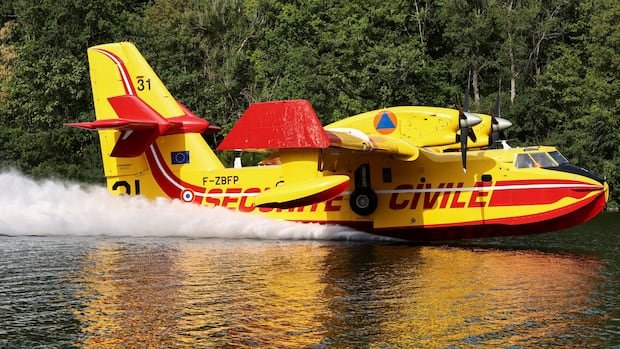

Amid a severe wildfire season in Canada, the United States, and Europe, there is mounting pressure on the manufacturer of Canadair “Super Scooper” water bombers to ramp up production. De Havilland, based in Calgary, has restarted production of the Canadair after acquiring the program from Bombardier in 2015.
These renowned aircraft, known for their hand-built quality with assembly primarily in Calgary, are in high demand. The new production line, initiated in 2022, is progressing well, with the first two planes expected to be completed and delivered by early 2028.
Leaders from Canada and Europe are eager to acquire these water bombers due to current shortages and aging fleets. The Canadair, originally introduced in the 1960s for combating wildfires in the Canadian wilderness, boasts a unique design that enables it to maneuver through narrow canyons at low altitudes and swiftly scoop up large amounts of water from natural sources.
As political pressure mounts, De Havilland is contemplating the possibility of establishing a second production line to meet the soaring demand. The company, which also manufactures other aircraft and employs around 4,000 individuals mainly in Calgary, Ontario, and Victoria, currently has orders for 38 water bombers, with delivery times ranging from 2032 to 2033.
Recognizing the urgent need for more water bombers globally, aviation experts emphasize the necessity for additional production lines to cater to the increasing demand. Failure to respond promptly could lead to foreign competitors developing rival firefighting aircraft, posing a threat to Canadian manufacturing jobs.
A recent Senate report highlighted the need for a national fleet of modern firefighting aircraft in Canada. While the federal government has leased 10 airplanes and helicopters to assist provincial wildfire crews this summer, there are challenges in meeting the high demand for these firefighting assets.
While aerial firefighting units play a crucial role in wildfire management, they are just one aspect of the comprehensive strategy. Ground crews remain essential in extinguishing fires, with aircraft aiding in containment and mitigation efforts. The federal government is committed to enhancing Canada’s capacity to respond to escalating wildfire seasons and collaborating closely with provincial and territorial partners to address the growing wildfire impacts.
In conclusion, the resurgence of Canadair production is a critical step in bolstering firefighting capabilities globally, but challenges remain in meeting the surging demand for these specialized aircraft.