
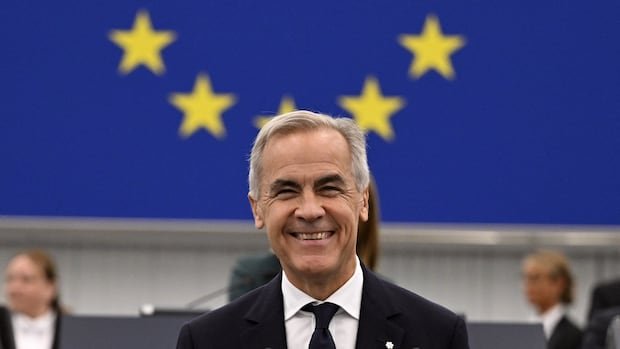

Prime Minister Mark Carney and European Commission President Ursula von der Leyen delivered speeches this week outlining a new collaboration between Canada and the EU, with many details still to be finalized.
Carney has reiterated that Canada does not intend to join the EU as a full member, but he expressed openness to von der Leyen’s proposal for Canada to become the EU’s first associate member. The term “associate member” does not have a legal definition yet, although it has been discussed in various forms in the past.
In his address to the European Parliament, Carney highlighted the importance of the proposed alliance without specifically mentioning the term “associate membership.” He emphasized that Canada values its independence and is cautious about compromising it for access to the EU.
Von der Leyen’s speech emphasized the desire to elevate the EU’s relationship with Canada across multiple sectors, including manufacturing, technology, defense, the Arctic, energy, and security. Specific areas of cooperation mentioned by Carney include critical minerals, defense capacity, artificial intelligence, energy security, and more.
While both leaders are enthusiastic about strengthening ties, the details of the partnership, including its name, potential concessions from Canada, and approval processes in EU member states and the Canadian Parliament, remain uncertain. Carney emphasized that any alliance with the EU would be subject to parliamentary debate and vote. The possibility of enshrining the “associate member” status into EU treaties faces challenges, requiring unanimity among all 27 member countries for ratification.
Concrete details are expected to emerge during a Canada-EU summit scheduled for October in Montreal, where discussions will likely continue on the proposed partnership’s scope and implications.