Boxing Legend George Chuvalo, 89, Dies After Battling Dementia
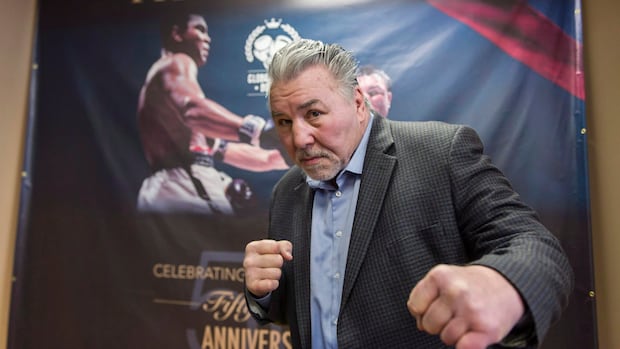
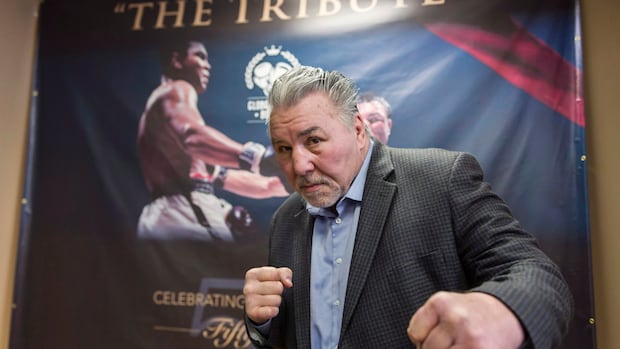
George Chuvalo, the Canadian heavyweight renowned for his remarkable ability to withstand the hardest punches without ever being knocked down, has passed away at the age of 89.
In his later years, Chuvalo dealt with dementia and had been living in a long-term care facility in Toronto. He passed away on Saturday, as reported by many family members and friends on social media.
Doug Ford, the Premier of Ontario, expressed his condolences on social media, mentioning that the boxer was a friend of the family.
“My thoughts are with all of George’s family and loved ones as we mourn his passing,” he stated.
Chuvalo famously went the full distance with Muhammad Ali in matches held in Toronto and Vancouver, enduring the fiercest blows from boxing legends Joe Frazier and George Foreman without once being knocked down.
However, it was a profound family tragedy after his boxing career concluded that truly devastated him.
WATCH | Peter Mansbridge interviews George Chuvalo:
George Chuvalo
February 24, 2012|
Duration
5:57
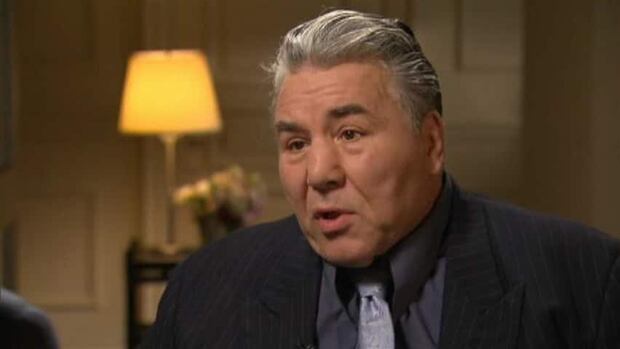
Peter Mansbridge sits down with champion heavyweight boxer George Chuvalo to talk about many of his famous fights.
In his 2013 autobiography Chuvalo: A Fighter’s Life, co-authored with Murray Greig, he reflected, “If you added up every punch I took and multiplied the total by 10,000, it wouldn’t begin to equal the pain of losing three sons and a wife to drugs and suicide.”
Born on September 12, 1937, in Toronto’s Junction area, to Croatian immigrants, Chuvalo developed an interest in boxing after spotting The Ring magazine at a local newsstand.
At the age of 10, Chuvalo first entered a boxing ring, and due to a growth spurt combined with weightlifting, he evolved into a formidable six-foot, 210-pound fighter.
He began his professional career in 1956 after a brief stint in amateur boxing, gaining recognition for his performances at the Jack Dempsey Tournament held at Maple Leaf Gardens.
However, during the early 1960s, his career plateaued under ineffective management until Toronto poultry entrepreneur Irv Ungerman took charge as his manager.
Chuvalo turned several victories into a notable 11th-round stoppage against contender Doug Jones at Madison Square Garden in 1964. He returned to that iconic venue the following year, narrowly losing a decision to former champion Floyd Patterson in a match that The Ring later named the best of 1965.
‘He just keeps coming and coming’
Chuvalo’s boxing style was relentless yet controlled. He pressed forward with powerful blows aimed at both the head and body, achieving stoppages in 88% of his victories.
Canadian fighter Bill Drover once remarked about him, “You can’t believe his strength. There’s no way to stop him. He just keeps coming and coming. The only way you can stop him is with a stick of dynamite.”
WATCH | Toronto boxing gym remembers George Chuvalo:
Sully’s Boxing Gym remembers George Chuvalo
September 13|
Duration
2:43
Canadian boxing icon George Chuvalo passed away at the age of 89 on Saturday. He was famous for never being knocked down in a professional bout and for his fights against former heavyweight champions Muhammad Ali, George Foreman and Joe Frazier. Radio-Canada paid a visit to the gym he used to train in and spoke with people there, who shared their memories of Chuvalo both inside and outside the ring over the years.
Chuvalo always asserted that his defensive skills were better than what people believed, but it was his extraordinary durability that truly stood out. He claimed that his ability to absorb punches was due to a 17.5-inch neck, which he strengthened through exercises.
In 1966, Chuvalo found himself in a heavyweight title fight as a substitute opponent when Ali’s connections with the Black Muslims and his controversial anti-Vietnam War stance rendered him a pariah in the United States.
The New York Times described the challenger’s prospects with a headline: Bettor’s-Eye View of Chuvalo: A Big Bum With a Lot of Heart.
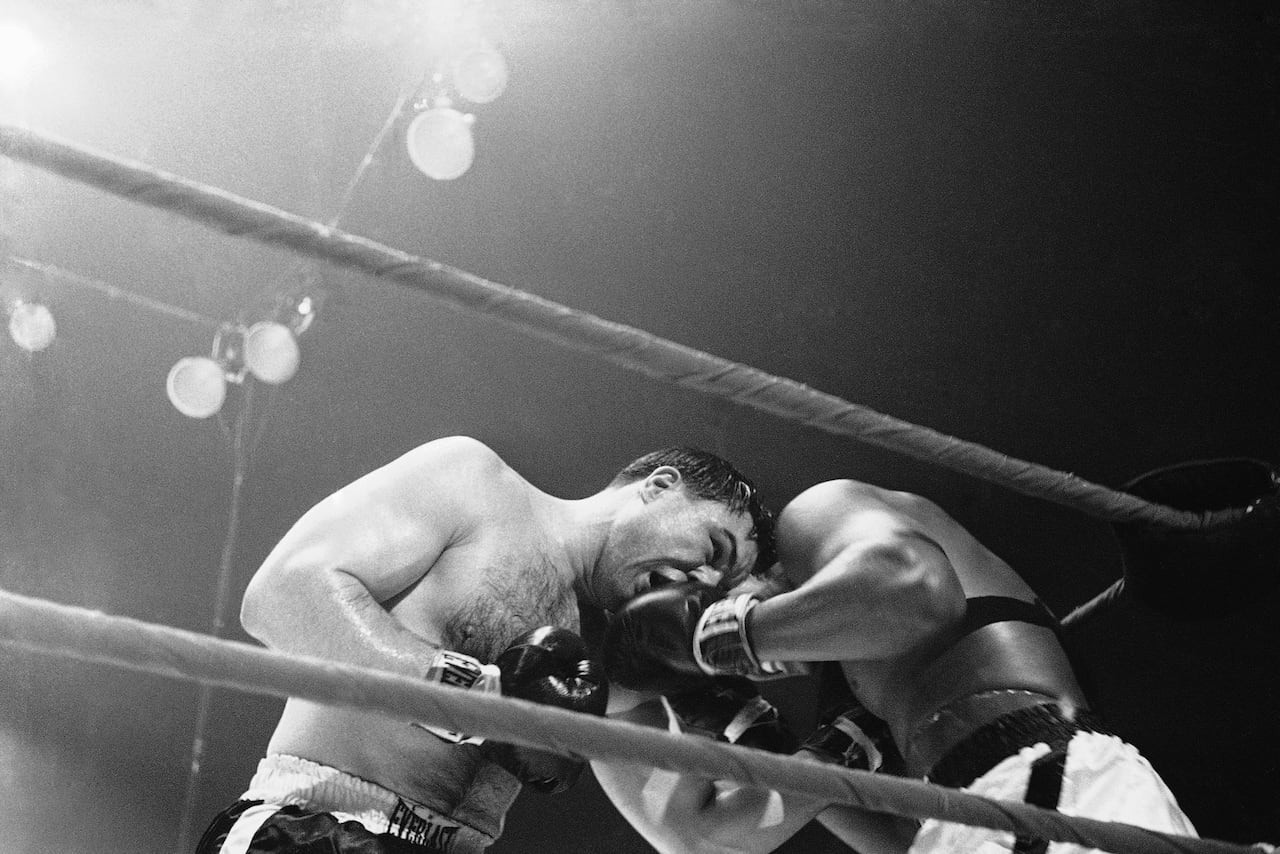
George Chuvalo, left, and Muhammad Ali go head to head as they trade blows near the rope in the fourth round of their fight in Toronto on March 29, 1966. (The Associated Press)
Although Chuvalo did not succeed in becoming Canada’s first heavyweight champion since Tommy Burns in the early 1900s, he garnered respect for his tenacious performance. Ali famously referred to him as the toughest opponent he had faced up to that time, but Chuvalo felt mixed emotions about being the first to take the champion the full 15 rounds.
“In a strange way, that fight defines me for many of my fellow Canadians, but it took me a long time to appreciate how good it made me feel,” he reflected.
Never knocked down
With his wife Lynne and five children at home, Chuvalo valued the financial rewards that came from his fight with Ali. He would defeat contenders such as Jerry Quarry and Manuel Ramos while narrowly losing to Oscar Bonavena and Jimmy Ellis.
In 1967, Chuvalo was stopped for the first time by Frazier, which required a silicone implant to prevent an eye from drooping. His loss to Foreman in the fourth round three years later was also significant, as the referee stepped in before Chuvalo’s “never knocked down” record could be compromised.
Chuvalo’s rematch with Ali in Vancouver in 1972 was less compelling and not as closely contested as their first encounter. He ultimately retired on a high note six years later, concluding with a record of 73 wins, 18 losses, and two draws, with 64 of those victories achieved by knockout.
Unlike Ali and other opponents, the long-term effects of the concussive blows he endured weren’t immediately visible. Chuvalo remained articulate and spoke rapidly, often ready with a witty remark or self-deprecating humor.
However, like many fighters, he struggled to adjust to what he described as the “mundane” aspects of life. Over the years, he opened a nightclub, obtained a real estate license, promoted fights, hosted a television show, and even faced a comically disastrous defeat in an arm-wrestling scene in David Cronenberg’s film The Fly.
WATCH | George Chuvalo’s date with destiny and Muhammad Ali:
George Chuvalo’s date with destiny and Muhammad Ali
March 29, 1966|
Duration
24:57
Chuvalo gets a shot at Ali’s world title in Toronto in 1966.
Chuvalo stated in a 1968 interview with CBC Radio that he did not want his four sons to pursue boxing as a career, but it was beyond his control to shield them from danger outside the ring. Tragically, his youngest son, Jesse, became addicted to heroin after a pain medication prescription ended, leading to his suicide at the age of 19 in 1985.
His older sons, George Jr. and Steven, also succumbed to drug use and turned to petty crime to support their habits. In a 1995 interview with CBC’s the fifth estate, Steven described the sense of “worthlessness” he and his brothers felt.
“My dad spent many years chasing us around the city, particularly Georgie and I, pulling us out of drug houses and essentially trying to keep us alive,” he recounted.
George Jr., just three days after being released from jail in Kingston, Ontario, died from an overdose on Halloween in 1993.
Four days later, 49-year-old Lynne Chuvalo took pills and left a suicide note.
“I never thought she’d do it, but I’m not surprised,” Chuvalo told the New York Times shortly after, noting that his wife never fully recovered from the loss of their first child.
Steven, who expressed a desire to make his father proud in an interview on the fifth estate, would also overdose and die eight months after that show aired.
Despite these tragedies, Chuvalo persevered, finding love again and cherishing moments spent with his eldest son Mitch, daughter Vanessa, and his grandchildren. He traveled across the country, delivering candid talks to students, which was documented in a CBC Radio report in 1998.
“If you’re ever tempted to try drugs, or flirt with the idea, I hope you think of me, George Chuvalo, and what drugs did to my family,” he expressed.
In 2017, reports emerged of familial disputes involving Chuvalo’s surviving children and his second wife, Joanne, whom he was in the process of divorcing. Some issues revolved around Chuvalo’s cognitive decline and his future care.
By 2022, Mitch Chuvalo revealed in a podcast that his father no longer recognized him during visits.
During this time, the City of Toronto acknowledged his legacy with the 2019 opening of the George Chuvalo Community Centre, a 7,000-square-foot facility located in the Junction.