
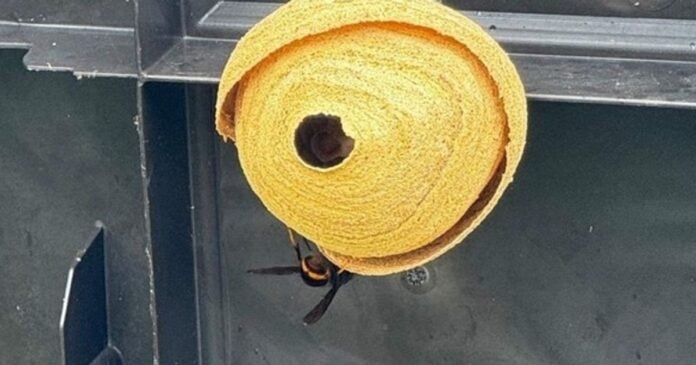

The UK is bracing for an imminent influx of killer Asian hornets, with more than 500 nests already discovered in nearby Jersey, heightening concerns of a potential invasion. The Channel Island’s population of these invasive insects has surged dramatically, marking a fourfold increase compared to last year, with each nest harboring up to 10,000 hornets. Jersey, the largest Channel Island, finds itself at the forefront of efforts to combat a full-blown infestation, as Asian hornets, which first arrived from mainland Europe nine years ago, have now firmly established their presence.
John De Carteret, a key figure in the Jersey Asian Hornet Group, emphasized the escalating incidents of people being stung and the strain this places on the Jersey government’s hornet reporting system. With a pressing need to prioritize nest identification and eradication, the current volume of hornet reports has overwhelmed the system, leading to potential delays in follow-up actions. More resources and active community involvement are urgently required to address this mounting challenge.
To tackle the escalating hornet population, two government officers specializing in invasive species, along with professional pest control experts and volunteers, are working tirelessly to manage the increasing number of nests. Despite their dedicated efforts, a backlog persists during this period, with a total of 469 Asian hornet nests officially recorded. John remains optimistic, citing enhanced public awareness, engagement, and volunteer support as crucial elements in the ongoing battle against the invasive species.
A recent study unveiled the wide-ranging diet of Asian hornets, revealing their consumption of various insects beyond honey bees. Researchers from the University of Exeter identified over 1,400 different species in the hornets’ diets, encompassing wasps, flies, beetles, butterflies, moths, and spiders. However, honey bees remain a preferred target for Asian hornets, consistently appearing in all tested nests.