
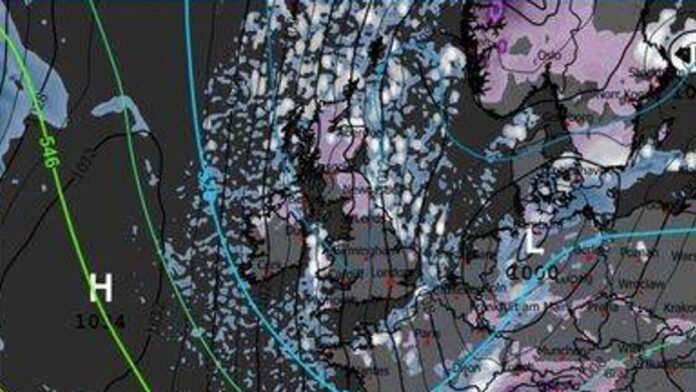

New weather forecasts are causing concern as they indicate that Britain is bracing for heavy snowfall due to an Arctic chill gripping extensive areas of the UK. The UK Health Security Agency (UKHSA) has issued an amber cold health alert for specific regions of England, with the Met Office warning of potentially frigid temperatures dropping to minus 10C this week. Multiple yellow weather warnings for snow and ice have been issued for Scotland and northern England from Monday to Thursday.
The initial cold snap of the season is expected to bring sub-zero temperatures. Recent weather charts by WXCharts show that from Tuesday, November 18, to Friday, November 21, large parts of northern England, Wales, Northern Ireland, and Scotland will not only witness snow showers but also see the snow settling.
Paul Gundersen, the chief forecaster at the Met Office, cautioned about scattered showers in the North East and far north of mainland Scotland on Monday night, posing a risk of icy conditions on roads and walkways. He further mentioned the potential for snowfall over high ground with accumulations ranging from 2-5cm above 150 meters and up to 5-10cm above 400 meters, possibly causing travel disruptions and infrastructure challenges in higher Scottish areas.
By Wednesday, a strong and extremely cold northerly airflow is expected to push temperatures even lower. Deputy chief forecaster Tom Crabtree indicated that Wednesday to Friday will be the coldest period of the week with significant weather impacts anticipated, leading to multiple alerts being issued.
The weather is forecasted to become drier starting from Friday, with milder temperatures and rain moving into western regions later in the day. Health alerts have been issued by the UKHSA for North East, North West, and Yorkshire and the Humber, with a yellow warning covering the rest of England from Monday noon until Saturday morning.
These weather conditions are likely to have substantial effects on health and social care services, including increased pressure on healthcare facilities, potentially inadequate indoor temperatures in places like hospitals and care homes, and a rise in fatalities, especially among individuals aged 65 and above or those with pre-existing health issues. The British Heart Foundation (BHF) is advising people with heart conditions to take extra precautions during the cold spell by staying warm, getting the flu vaccine, and following other recommended measures.
To combat the cold weather, the BHF recommends maintaining indoor temperatures above 18 degrees, wearing layers for insulation, staying active indoors, consuming warm meals and beverages, and using a scarf to breathe warmer air if experiencing angina symptoms.