
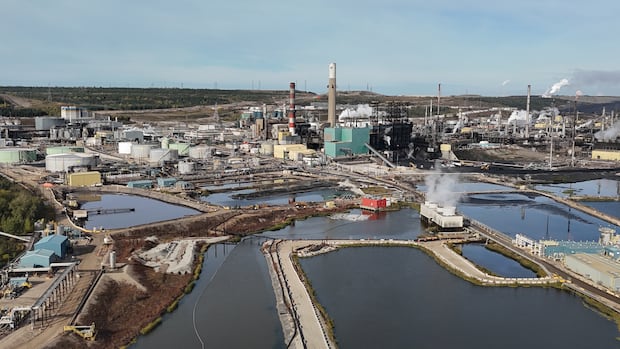

The government of Alberta is launching a new royalty program aimed at reducing the financial burden for capital investments necessary for initiating new projects and expanding existing ones in the oilsands sector.
Under the Oil Sands Growth Program (OGP), projects that receive approval will benefit from a lowered royalty rate of two percent during their initial five years of operation. This rate will subsequently increase by one percentage point each year until it reaches six percent in the ninth and tenth years.
Premier Danielle Smith anticipates that this initiative will attract investors, particularly as the province targets an ambitious goal of producing 8 million barrels of oil daily by 2035. As of Friday, Smith noted that Alberta’s production is currently around 5 million barrels.
“To achieve our objective of doubling oilsands production within the next decade, we require hundreds of billions in new investments, and we must do this while competing with the United States and Venezuela,” Smith remarked at a news conference held in Calgary, where the new program was unveiled.
“The competition for global investment is significant. Major energy projects demand billions in capital and extensive planning.”
According to Smith, the OGP will reduce initial financial obstacles for new projects and expansions, especially as advocates for the Pacific Link pipeline seek companies to fill anticipated capacity.
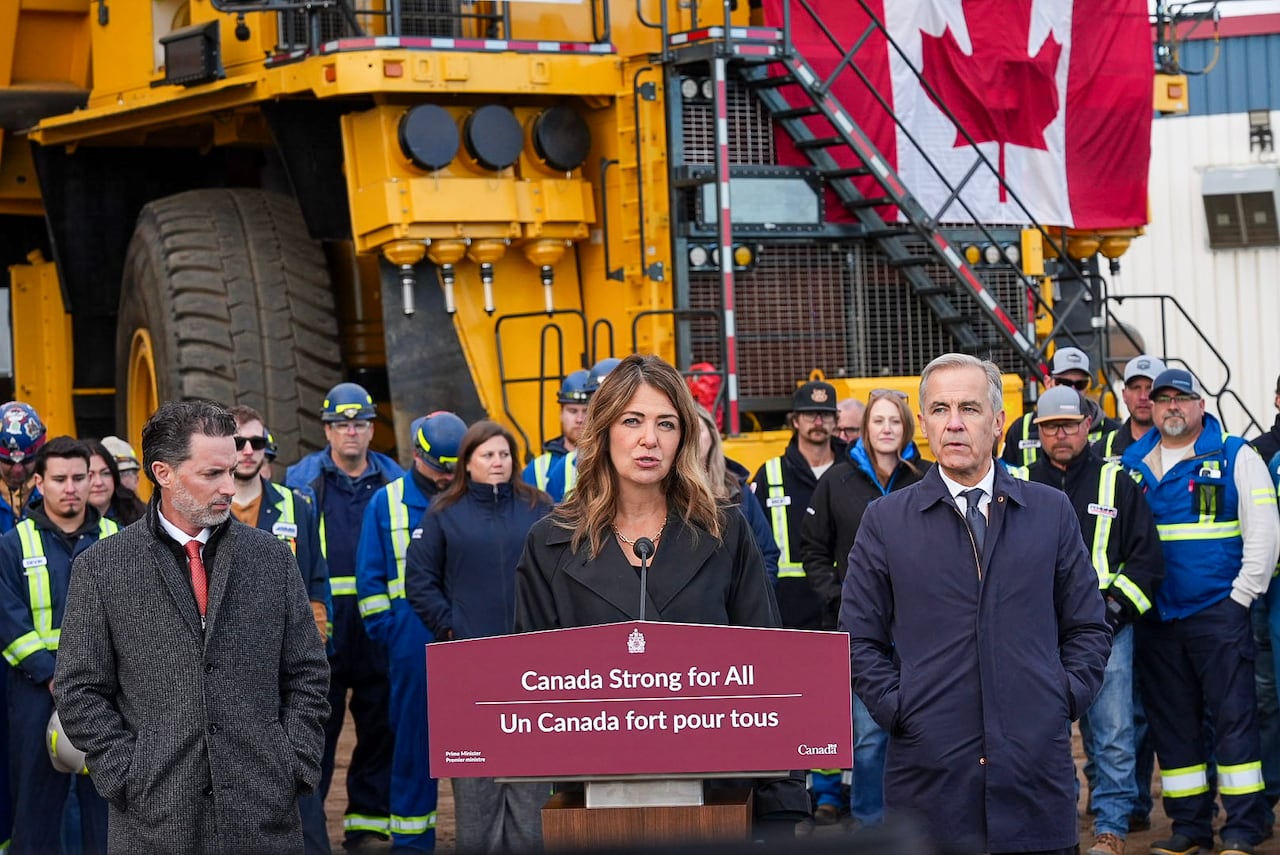
Alberta Premier Danielle Smith, alongside Pembina Pipeline CEO Scott Burrows and Prime Minister Mark Carney, at a press conference north of Fort McMurray, Alta. on Oct. 1, 2026, to declare the Pacific Link pipeline a project of national interest. (Vincent McDermott/CBC)
Smith clarified that the OGP will not replace the current royalty structure or guarantee project approvals, emphasizing that it will also adhere to environmental and Indigenous consultation protocols.
The program will not be restricted to the five members of the Oil Sands Alliance, which includes the largest oilsands companies in Canada. Project approvals will be determined on a case-by-case basis and can also encompass expansions.
After a decade, companies will revert to the standard royalty framework unless they fail to meet production, environmental, or regulatory standards.
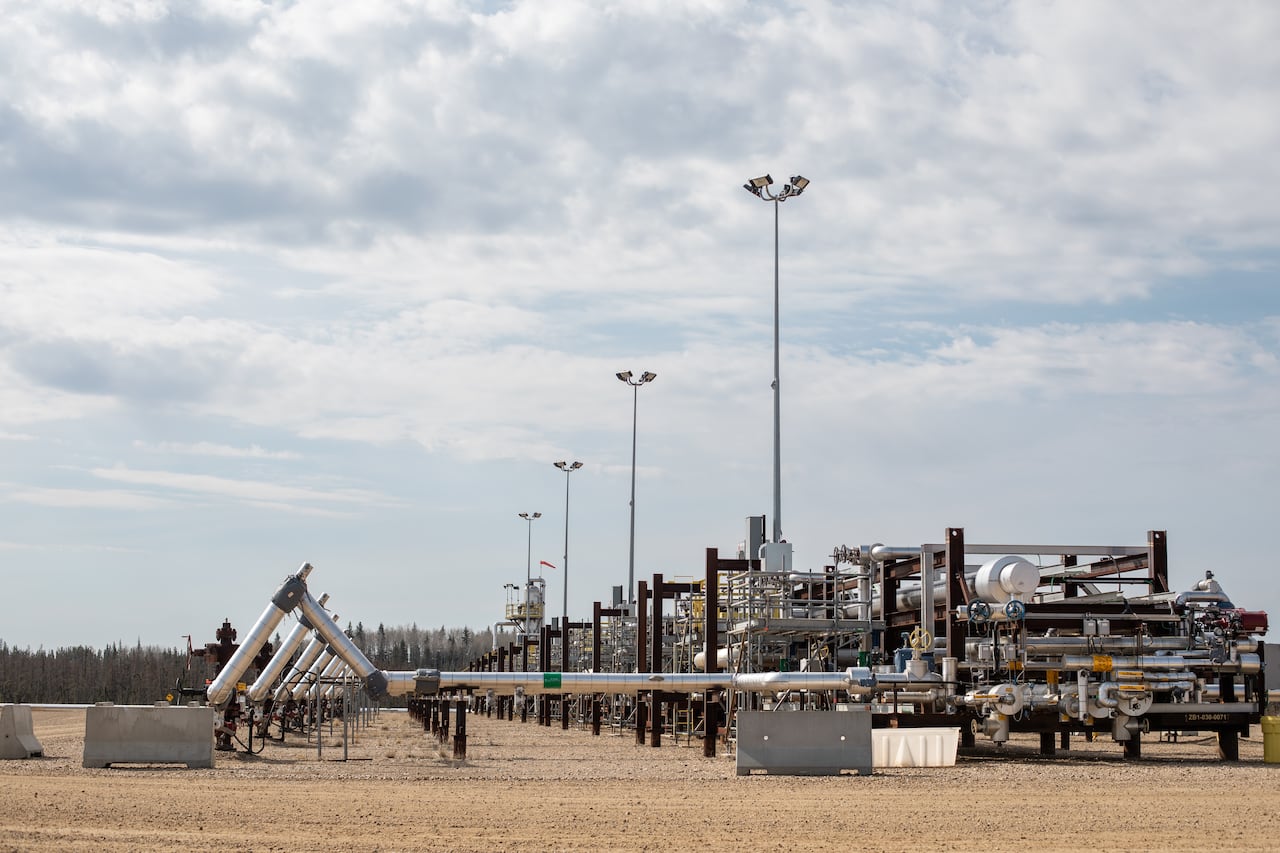
Steam-assisted gravity drainage (SAGD) pads at Cenovus Energy’s Christina Lake oilsands facility, located southeast of Fort McMurray, Alta., on Wednesday, April 24, 2024. The company reports that this pad, utilizing the latest technology, requires less energy per wellhead to extract bitumen than older models. (Amber Bracken/The Canadian Press)
The Alberta government intends to roll out the OGP this spring, stating that qualifying projects announced after November 15 will still be eligible. Smith mentioned that the province will assess the program’s effectiveness in three years, specifically in December 2029.
Unlike the current royalty system, the OGP will not tie rates to West Texas Intermediate oil prices. Alberta Energy Minister Brian Jean indicated that if the standard provincial royalty rate is lower than the incentive rate, companies will pay the lesser amount.
“Oilsands projects represent some of the most substantial and capital-intensive energy investments globally. Firms require a highly competitive investment environment and confidence in the fiscal framework,” Jean stated.
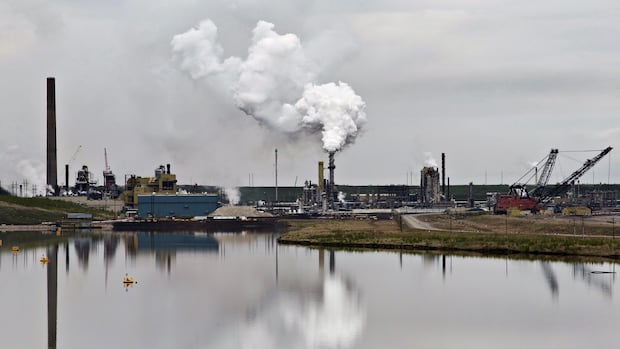
The Alberta government is unveiling a royalty incentive program, known as the Oil Sands Growth Program, which aims to facilitate the province’s goal of doubling current oilsands production by 2035 by reducing the capital investment necessary to initiate new projects.
Smith highlighted several regulatory rollbacks as achievements for the oilsands, including the federal government’s decision to abolish its oil-and-gas emissions cap and net-zero power regulations. She also commended the advancements on the Pacific Link pipeline and noted that recent surveys indicate strong support from Canadians and Indigenous communities for the development of the nation’s oil and gas sector.
Kendall Dilling, president and CEO of the Oil Sands Alliance, acknowledged that there is still much work to be done to realize the sector’s full potential, including the need to modernize and simplify regulatory processes. However, he noted that both the government and industry have been proactive in tackling these issues, resulting in improved investment conditions over the past year.
“Today, I feel more optimistic than ever,” Dilling expressed during the news conference on Friday.
-
Analysis
Danielle Smith wants to double Alberta oil production. Can she bring back the boom?
-
Ottawa wants to expand the oilsands, but the industry’s wastewater problem will grow with it
Janetta McKenzie, director of oil and gas at the Pembina Institute, a clean-energy think tank, expresses skepticism regarding the necessity of the OGP to stimulate investment, especially when considering the taxpayer-funded pipeline and various other tax incentives recently announced by the federal government, as stated in her comments to CBC News.
“The oilsands sector has been quite profitable for an extended period. It is well-established and not an industry that has struggled with revenues in recent years,” she noted.
She also expressed concern that Alberta might forfeit oil revenue by eliminating price adjustments, as oil companies have been experiencing significant profits. McKenzie is also apprehensive about the environmental implications of increased production.