

Some of the leading automotive companies worldwide have been accused of prioritizing sales over environmental concerns in the ongoing “dieselgate” controversy. Allegations surfaced during a trial at the High Court indicating that these companies installed devices in their vehicles to detect emissions tests, manipulating the levels of harmful pollutants to comply with regulations during testing but emitting significantly higher levels of nitrogen oxides and other pollutants during regular driving.
The trial, anticipated to span three months, marks the largest legal action of its kind in English history, with a verdict not expected until the following summer. The claims, valued at approximately £6 billion by legal representatives, involve 1.6 million claimants accusing the manufacturers of deceiving diesel emissions tests, a decade after Volkswagen faced similar accusations.
Owners of diesel vehicles from Mercedes-Benz, Ford, Nissan, Renault, and the Stellantis-owned brands Peugeot and Citroen allege the use of illegal “defeat devices” by the companies. In response, the manufacturers deny the allegations, asserting that the claims lack merit and distancing themselves from the 2015 scandal. The trial will focus on a select group of diesel vehicles from the five manufacturers, with the court’s ruling expected to influence numerous other claims against different manufacturers.
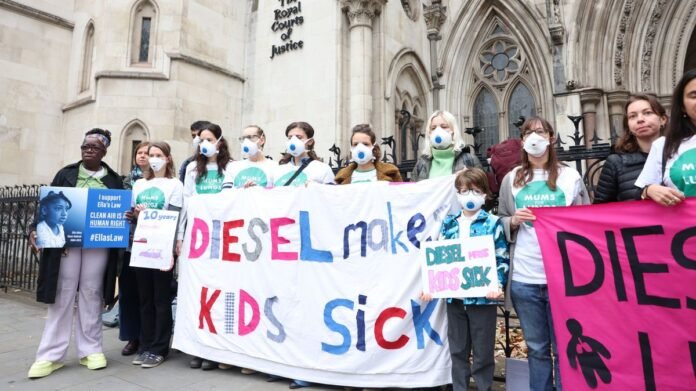
A poignant moment outside the Royal Courts of Justice in London saw campaigner Rosamund Adoo-Kissi-Debrah express hope for justice following the tragic death of her daughter, Ella, due to a pollution-related asthma attack in 2013. Ella’s case, which led to air pollution being cited as a cause of death in a landmark 2020 coroner’s ruling, highlights the ongoing impact of diesel emissions on public health.
Among those present at the trial’s commencement was Adam Kamenetzky, who voiced disappointment after purchasing a Mercedes SUV under the premise of eco-friendliness, only to discover discrepancies in emission levels, fueling his participation in the legal proceedings. The trial’s opening statements underscored the industry’s alleged conscious choice to prioritize sales over environmental compliance, leading to the use of questionable tactics to boost car sales.
The case revolves around excessive nitrogen oxides (NOx) emissions and their detrimental health effects, as highlighted in a report linking NOx emissions to premature deaths and childhood asthma cases. While the manufacturers refute the claims, asserting the absence of prohibited defeat devices in their vehicles, the trial is poised to shape future legal battles and potentially unravel one of the most significant corporate trust violations in recent memory.
The trial, overseen by Lady Justice Cockerill, is set to conclude in December, with legal deliberations continuing until March 2026. Martyn Day, representing the claimants, emphasized the potential gravity of the allegations, suggesting a severe breach of corporate trust if proven true. Notably, the High Court in London previously ruled against Volkswagen in a similar case in 2020, with VW settling claims without admitting liability in 2022.