
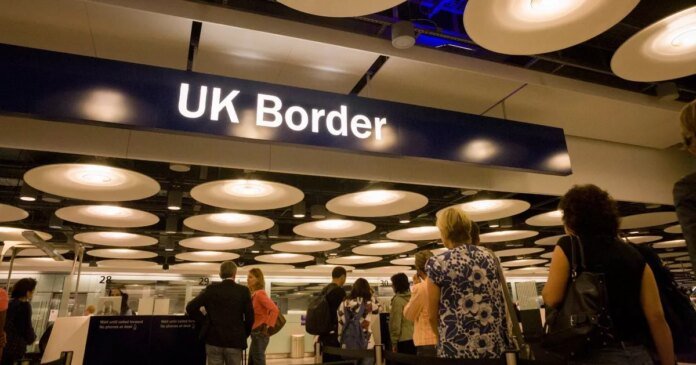

British travelers are being cautioned about potential lengthy delays when entering Europe due to the implementation of new post-Brexit checks starting next month. The upcoming Entry/Exit System (EES) measures at EU borders will require individuals, including UK and non-EU nationals on short stays, to undergo fingerprinting, facial recognition, and passport scanning, replacing traditional passport stamping.
According to a UK government spokesperson, preparations have been made to accommodate the EES checks, with ongoing discussions with European counterparts to mitigate any disruptions for British citizens. Travelers heading to Schengen area countries, such as Iceland, Liechtenstein, Norway, and Switzerland, will be subject to the new system, while visits to Ireland and Cyprus will remain unaffected.
Under the EES framework, British tourists will need to register upon their initial arrival in a participating country post-implementation. Registrations will remain valid for three years or until passport expiration. All travelers, even infants, will undergo photo documentation, with children under 12 exempt from fingerprinting requirements. The EES rollout across European nations will span six months, resulting in varied entry procedures at different transport hubs until April of the following year.
For individuals utilizing the Port of Dover, Eurotunnel at Folkestone, or Eurostar at St Pancras International, the EES process will occur at the UK border before departure. The UK government has allocated £10.5 million to fund the necessary scanners and equipment for the enhanced checks. The EES system aims to enhance monitoring of individuals utilizing the 90-day visa-free travel provision, with exceptions in place for specific categories of British citizens and dual UK-EU passport holders.
While the EES checks are projected to take 1-2 minutes per person, potential delays at Schengen area Border Controls are anticipated. To address possible congestion, plans are in place at juxtaposed ports like Eurotunnel, Eurostar, and the Port of Dover to minimize disruptions during peak periods.