
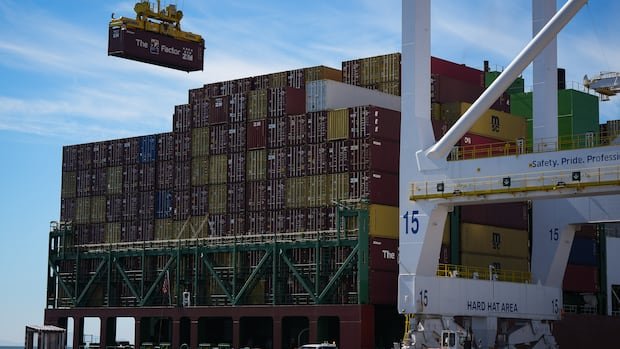

As the clock ticks down for Canada to finalize a trade agreement with the United States, numerous Canadian businesses are feeling apprehensive, anticipating a potential loss of up to half of their sales if the new tariffs are imposed. The impending U.S. tariffs, scheduled to come into effect on Wednesday, would impact a wide range of Canadian products, including electronics, dairy, alcohol, and wood, among others, totaling $28 billion in value.
Negotiations are reaching a critical stage, with Canadian officials likely to engage with U.S. Trade Representative Jamieson Greer before Prime Minister Mark Carney and U.S. President Donald Trump have discussions ahead of the tariff deadline. The decision on any deal ultimately rests with President Trump, as emphasized by America’s chief trade negotiator.
Some Canadian businesses are concerned that the proposed tariffs would not only raise prices for American customers but also render cross-border shipping economically unfeasible. For instance, Todd Stafford, the president of Northern Cables in Brockville, Ontario, revealed that half of their sales rely on U.S. buyers. The company, which specializes in manufacturing copper and aluminum power cables, operates with seven warehouses in the U.S.
Amidst the uncertainty, businesses like Northern Cables fear the potential repercussions of the new tariffs, which could lead to immediate business losses. If the tariffs are implemented, Stafford expressed concerns about the inability to transport goods across the border, which could significantly impact their operations and workforce.
Unlike previous trade deals, the forthcoming tariffs threaten to affect approximately five percent of Canada’s overall trade with the U.S., impacting various exports such as hockey sticks, certain flowers, and antiques. Sectors like energy, potash, and critical minerals are expected to remain unaffected by the new tariffs.
The looming trade tensions have left many Canadian businesses anxious, with concerns about losing a significant portion of their revenue. Business owners, like Cindy Baldassi from Calgary, who runs a handmade jewelry company, are already feeling the impact, as they brace for potential losses. Despite efforts to adapt to the changing trade landscape, the uncertainty surrounding the tariffs is affecting businesses across different sectors.
Even before the implementation of the new tariffs, the threat alone has had repercussions on businesses, with some reporting layoffs and reduced orders. The uncertainty has forced businesses to make difficult decisions, impacting their operations and relationships with U.S. customers.
As the deadline approaches, Canadian businesses are preparing for the worst, hoping for a resolution that avoids the potential economic fallout. The impact of the tariffs is not only felt by large corporations but also by small businesses, highlighting the widespread concern across various industries.