
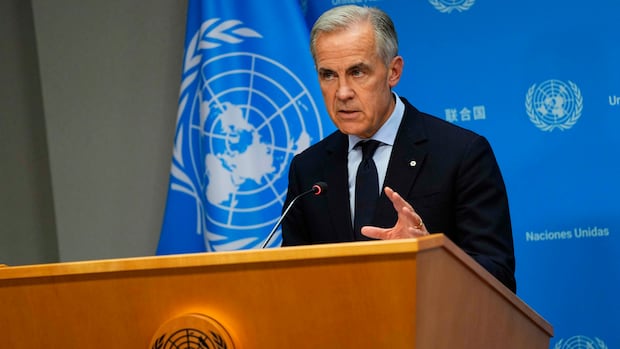

Prime Minister Mark Carney asserts that his administration has obtained a distinct mandate from the electorate in the most recent general election, as well as in following byelections, to “fortify Canada,” and he is moving forward with reforms to federal project approvals and the Labour Code, despite facing backlash from certain sectors.
These remarks were made a day after the government introduced Bill C-39, a comprehensive 246-page bill aimed at eliminating what critics describe as a cumbersome approvals process for significant projects, while establishing a one-year deadline for federal assessments.
Included in the legislation is a clause that allows the labour minister to intervene and terminate a work stoppage if it is considered to be in the “national interest,” which has sparked criticism from labour leaders who argue it undermines the right to strike.
Carney emphasized that Canada is facing economic challenges and threats to its sovereignty from the United States, and the primary focus of Ottawa is to accelerate development to sustain economic growth and job creation.
“We have been very explicit that our focus will be on things we can influence, and foremost is building at home, reinforcing Canada, and ensuring that our development benefits everyone,” Carney stated.
“The government was elected under a very clear mandate.”
-
Analysis
A consequential fall in Parliament begins with familiar concerns and a new test
-
Modi expected to visit Canada in December, Carney says
Carney has set up the Major Projects Office to facilitate the advancement of initiatives such as port expansions, mining operations, hydroelectric connections, and pipelines through the federal approval process. Since its inception last year, over twenty projects and initiatives have been added to its agenda.
This recent legislative effort aims to simplify the approval process for additional projects requiring federal consent.
While interacting with the media during the United Nations General Assembly in New York, Carney noted that current projects encounter a complex web of bureaucratic hurdles, with various agencies often overseeing different facets of the approval process.
Referring to the protracted struggle to construct a new rail bypass following the Lac-Mégantic tragedy, Carney indicated that he is working to enhance the efficiency of the approval process.
“A delay in decision-making is tantamount to denying a project,” Carney remarked. “If you intend to reject a proposal — make that decision within a year.”
When asked if his government has the authority to implement measures such as privatizing airports and amending the Labour Code, Prime Minister Mark Carney affirmed ‘yes,’ based on Parliament’s approval of his government’s budget legislation.
Carney noted that the approval timelines under the previous administration were so lengthy that businesses essentially “stopped investing in construction.”
“This situation hampers Canadian autonomy. It is detrimental to Canadian workers. It leads to fewer job opportunities and increases the cost of living for Canadian households,” Carney expressed.
“This government has committed to reversing that trend.”
In response to union concerns that the labour provisions of C-39 undermine worker rights, Carney stated that the bill “definitely strengthens the right to strike,” but it does introduce new provisions that clarify when a minister can intervene to halt job actions.
Previously, Section 107 of the Canada Labour Code allowed the minister to instruct the Canada Industrial Relations Board (CIRB) to “take necessary actions as deemed essential” to maintain or secure industrial tranquility in federally regulated sectors.
With the proposed amendments, the language would become somewhat clearer: a minister may mandate an end to strikes within their jurisdiction if such actions “negatively impact or could negatively impact the national interest.”
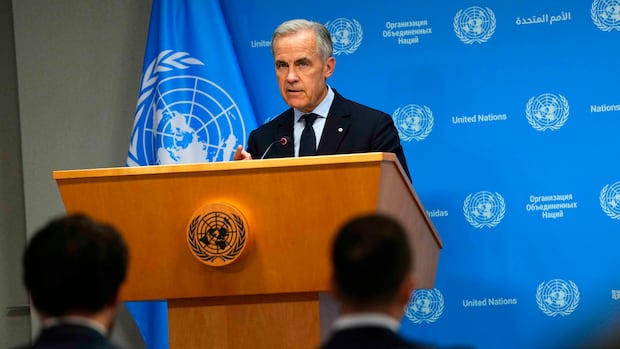
Prime Minister Mark Carney states that Bill C-39, known as the Building Canada Strong Act, will enhance employers’ obligation to ‘negotiate in good faith’ and promote transparency in labour negotiations.
The government asserts that this provision will only be utilized in exceptional situations; however, unions contend that the language is susceptible to misuse and could encourage employers to delay reaching agreements with workers while awaiting government intervention.
“A right that is not actionable is not a right,” remarked Bea Bruske, president of the Canadian Labour Congress.
“Unions in Canada fought for the right to strike, and we will defend it fiercely.”
NDP Leader Avi Lewis expressed concerns about possible federal overreach into the collective bargaining realm.
“The NDP stands firmly alongside Canada’s labour movement,” he stated in a press release.

In discussions with journalists regarding the new Liberal major projects bill, Bea Bruske, president of the Canadian Labour Congress, states that while Canadian workers aim to contribute to the U.S. trade conflict, ‘we cannot negotiate with our hands tied behind our backs while facing Trump.’
On the other hand, several industry groups are enthusiastic about the government’s economic initiatives.
“This legislation directly addresses two persistent obstacles to Canada’s growth: sluggish and unpredictable project approvals and workforce instability impacting essential supply chains,” noted Adam Legge, president of the Business Council of Alberta.
“These measures reflect a renewed and greatly appreciated focus from Ottawa on establishing conditions conducive to growth, investment, hiring, and competition.”
The federal Conservative Party has yet to disclose its stance on how its members will vote regarding this new legislation — which was not a focal point during their recent question period criticisms — although leader Pierre Poilievre has expressed his discontent with the proposals.
He asserted that a “genuine bill” crafted to stimulate the economy would “eliminate all anti-development regulations.”
Tag: rewrite-pending