
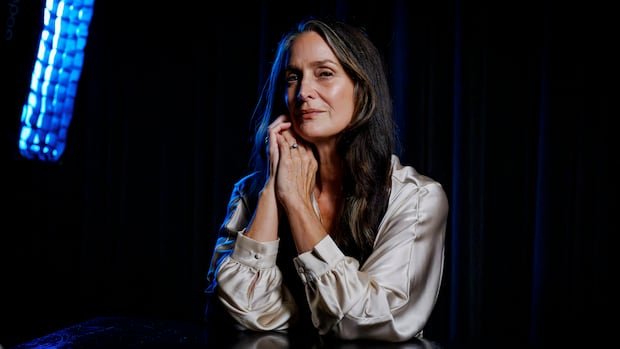

Carrie-Anne Moss was engrossed in a chapter on Baba Yaga from her cherished book when an intriguing offer to star in the new series, Yaga, came her way. This coincidence felt like a meaningful sign to the actress. In a conversation with CBC’s Eli Glasner, Moss shared her deep connection to the book “Women Who Run with the Wolves: Myths and Stories of the Wild Woman Archetype” by Clarissa Pinkola Estés, which she has owned since 1999. The chapter’s theme resonated with the project she was presented with.
The series Yaga, created by Canadian playwright Kat Sandler, is a dark mystery-thriller adapted from Sandler’s 2019 stage play. The show features Noah Reid from Schitt’s Creek as private investigator Charlie Rapp, on a mission to locate missing heir Henry Park, portrayed by Hudson Williams from Heated Rivalry. Set in the fictional town of Whittock, the storyline draws parallels to the Slavic folklore of Baba Yaga, a mysterious figure known for her enigmatic nature and unusual powers.
Sandler personally reached out to Moss, explaining why she envisioned her in the role of Katherine Hargrove, a professor with a penchant for younger men. After reviewing Sandler’s pitch and the scripts, Moss was captivated by the character and accepted the role. Filming in Victoria has brought Moss back to her roots in British Columbia, where she spent summers in her youth with family on the island.
Reflecting on her journey, Moss reminisced about her early aspirations to become an actress, nurtured by her experiences in Vancouver and her love for the performing arts. Despite the challenges she faced during her move to Los Angeles for her acting career, Moss remained steadfast in her pursuit, believing in the purity of her intentions. Her breakthrough role as Trinity in The Matrix series marked a turning point in her career, propelling her to international fame.
While Moss values her acting career, she has also prioritized raising her children and cherishes the time spent with them. Currently residing in New Hampshire for a quieter lifestyle, Moss continues to explore the realms of creativity and human expression. Expressing concerns about the influence of artificial intelligence on artistic endeavors, Moss emphasizes the importance of preserving human creativity and storytelling traditions.
As Moss navigates her path forward, she remains committed to the transformative power of storytelling and the profound connections it fosters. Embracing the opportunities that come her way, Moss finds herself drawn back to her roots in British Columbia, embracing a role that seems to have found her at a serendipitous moment.