
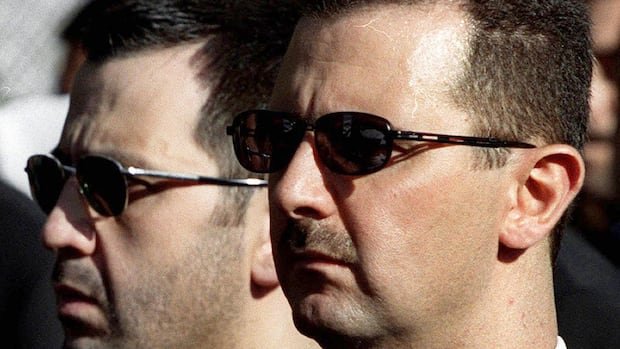

A Syrian court has handed down a death sentence in absentia to former Syrian President Bashar Assad and his younger brother for their involvement in crimes against humanity and war crimes during the 14-year conflict in Syria, which resulted in around 500,000 casualties.
The verdict, pronounced by Judge Fakhareddine al-Aryan at the Fourth Criminal Court in Damascus, marks the first time that Assad or any members of his close circle have faced such severe consequences since their decades-long rule came to an end two years ago. The court session, broadcast live on state TV, highlighted how Bashar Assad utilized state mechanisms to carry out war crimes and crimes against humanity.
Atef Najib, Assad’s maternal cousin, who was found guilty of orchestrating a brutal crackdown in Daraa that sparked the uprising and subsequent civil war, was also sentenced to death in the same case. Amid heightened security measures, Najib appeared in court wearing a prisoner’s attire while the judge announced the sentence. A crowd gathered outside the courthouse in central Damascus to witness the outcome.
Following the fall of the government in December 2024, Assad and his brother Maher sought refuge in Russia and were granted political asylum. The new Syrian authorities have requested Russia to extradite the Assads back to Syria.
Najib, a former Syrian army brigadier general, who was sanctioned by the U.S. Treasury Department in April 2011, is one of the highest-ranking officials to face trial. He served as the head of the political security branch in Daraa province under Assad in 2011. During his tenure, numerous teenagers who protested against the government were arrested and subjected to torture, leading to widespread demonstrations against Assad’s oppressive regime.
Some of Najib’s victims, including individuals who were teenagers at the time of the crackdown, were present at the courthouse during the sentencing. They expressed relief and satisfaction that justice was finally served. However, human rights organizations like Human Rights Watch have raised concerns about the death penalty, emphasizing the need for a fair trial process for Najib and highlighting the importance of establishing a robust and lasting justice system in Syria for true accountability for past atrocities.