
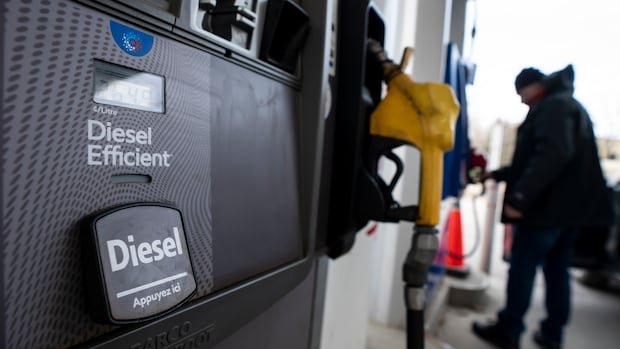

With soaring diesel costs attributed to ongoing global conflicts, the expense of refueling trucks transporting goods across Canada has reached unprecedented levels, experts warn. Tej Dulat, from the Canadian Truck Operators Association, described the situation as dire, emphasizing that commercial trucks consume substantial amounts of fuel weekly, with fuel costs being a major expense for trucking companies. Despite the industry’s ability to absorb short-term price spikes, margins have become tighter since the 2022 price surge following Russia’s invasion of Ukraine. Consequently, these increased costs are expected to be passed on to consumers, potentially affecting grocery prices.
As of the latest data, diesel prices in Canada stood at $2.62 per litre, surpassing last week’s peak of $2.52 after a brief decline earlier in the current week. This price is over a dollar higher than the previous year and exceeds the highest weekly average in 2022, which was $2.30 per litre. Notably, Vancouver recorded even higher prices at $2.92 per litre on the same day. In the U.S., the average diesel price hit a record high of over $6 per gallon on Friday.
While recent focus has been on the impact of tariffs on Canadian goods, experts suggest that the surge in oil prices due to geopolitical conflicts is currently having a more significant effect. Industries reliant on diesel fuel, such as farming, are also experiencing financial strain from the increased oil prices. Farmers in Alberta reported an 80 cents per litre increase in diesel costs compared to the previous year, impacting their profits.
The scarcity of diesel is a critical issue, with experts noting a significant drop in net diesel exports from the Persian Gulf region. Furthermore, geopolitical factors, including Russia’s ban on diesel exports and the temporary closure of Canada’s largest refinery in New Brunswick, are exacerbating the diesel supply shortage. To alleviate some of the financial burden, the federal government extended the suspension of the federal fuel excise tax, including the four-cent per litre tax on diesel, until January 2027. However, industry analysts express concerns that these measures may not be sufficient to offset the escalating costs.
Looking ahead, concerns arise about the potential impact on Canadian consumers as diesel prices typically rise during winter. Energy analyst Dan McTeague warns of a potentially costly winter for various industries and consumers alike. Evan Fraser from the University of Guelph’s Arrell Food Institute underscores the far-reaching impact of diesel price hikes on the food supply chain, affecting transportation, storage, and production. Given the current challenges, including extreme weather conditions disrupting harvests, Fraser predicts sustained upward pressure on food prices, leading to prolonged economic difficulties, particularly for low-income individuals.
As the situation evolves, the uncertainty surrounding global food production and trade raises concerns about a lasting shift towards elevated food prices, posing challenges for the most vulnerable populations in the short term.