
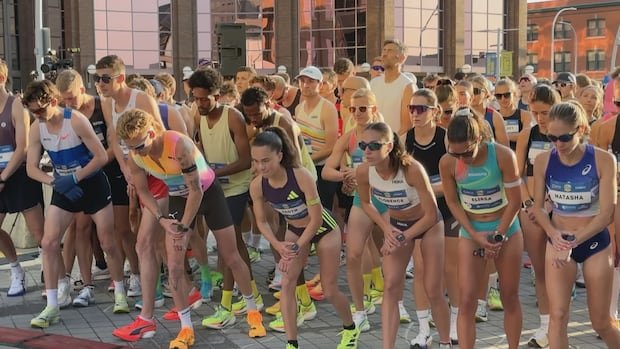

Two days post the conclusion of the Edmonton Marathon, an apology has been issued by the race director following the revelation of an error in accounting for detours which resulted in the race courses being longer than intended. The admission validated suspicions held by many of the runners.
In a statement released on Tuesday, Edmonton Marathon race director Tom Keogh disclosed that the half-marathon and marathon courses were measured to be 674.7 meters longer than initially believed. Keogh acknowledged that an error had occurred in calculating the detour-related course adjustments and extended a sincere apology for the oversight.
The additional distance due to the Wellington Bridge detour was only partially offset by adjustments made to the west end turnaround point of the course, resulting in the prolonged distance. Keogh took full ownership of the mistake, expressing gratitude for the participants who reached out with concerns.
Prior to the statement, both elite and amateur runners had expressed doubts about the accuracy of the race distances. Keogh had initially defended the correctness of the course measurements, but later acknowledged the error in the calculation process.
The Edmonton Marathon, being a qualifier for prestigious events like the Boston Marathon, is collaborating with Athletics Canada and other stakeholders to address the impact of the error on this year’s results. Athletes, like Calgary’s Mitch Walz, who had trained extensively for the marathon with specific time goals in mind, were affected by the miscalculation.
Walz, who had aimed for a Boston Marathon qualifying time, found his chip time to be longer than expected due to the extended course length. The emotional toll of the situation was evident, with Walz describing the turn of events as a roller-coaster experience.
With a commitment to prevent similar errors in the future, Keogh stated that they would review and enhance their certification processes. Meanwhile, the Boston Athletic Association clarified its position on adjusted results based on race distances for qualifying purposes.
The resolution of the distance discrepancy and its impact on participants, including elite athletes, remains a focal point of attention following the Edmonton Marathon.