
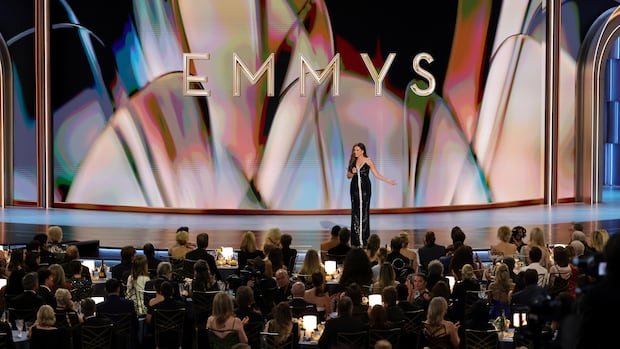

In 2015, advocate and writer April Reign introduced the #OscarsSoWhite hashtag. Presently, she expresses her disinterest in watching award ceremonies live, citing the recent Emmys as a prime example. Monday night’s Primetime Emmy Awards broadcast showcased a noticeable lack of diversity among the winners. Notably, actors of color were completely excluded from the major acting categories, with all 10 awards going to white performers.
Reign stated, “It’s not a regression, it’s definitely a stall.” The supporting actor and supporting actress categories in a limited series were already awarded at the Creative Arts Emmys last week, but those victories did not alter the overall outcome.
By the following morning, #EmmysSoWhite was trending, with social media users criticizing the Television Academy. Reign, who initiated the #OscarsSoWhite movement in 2015, emphasized the persistent pattern of underrepresentation in award outcomes. She highlighted the need to address diversity issues beyond award seasons, focusing on the industry decision-makers who influence the storytelling process.
The discussion surrounding representation should commence long before awards are presented, Reign emphasized. She urged scrutiny of casting choices, showrunners, and the portrayal of characters to avoid recurring diversity discussions during award seasons.
Despite the lack of recognition for actors of color during the main Emmy broadcast, Hiro Murai secured a directing award for “Widow’s Bay,” becoming the first Asian filmmaker to achieve this accolade in comedy series direction at the Emmys.
In terms of historical context, the report reveals a decline in diverse acting nominations compared to previous years, indicating a persistent challenge in achieving inclusivity at the Emmys. The evolving landscape of diversity in Emmy wins over recent years reflects a complex journey towards equitable representation in the television industry.