
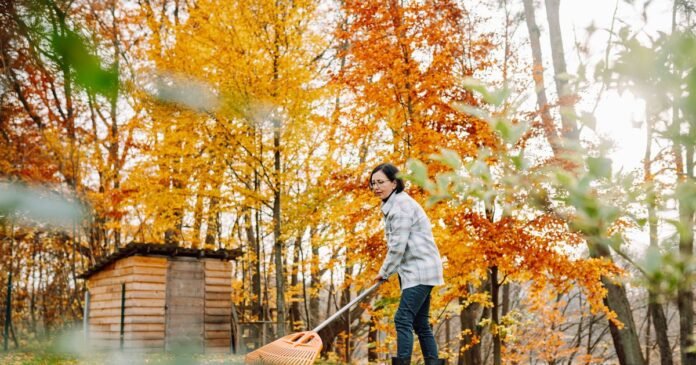

Gardeners are being advised to refrain from clearing away their autumn leaves as they can offer benefits to the lawn. This suggestion coincides with the recommendation for botanists to give their lawns a final trim to help them survive the harsh winter conditions.
As winter approaches, gardeners are gearing up for the colder weather, with temperatures already dropping. The colorful plants that brightened up spring and summer have started to wither away, preparing for their dormant phase until next year.
Despite the imminent cold snap expected in the UK, some environmental experts are advocating against raking up autumn leaves. Leaves typically fall heavily from late October to mid-November, covering pavements across the country. Gardeners are being urged to leave them undisturbed as they can significantly benefit the local ecosystem without immediate notice.
Ecological writer Alys Fowler emphasizes the importance of leaving fallen leaves untouched, pointing out that they serve as habitats for insects as winter sets in. She highlights that leaves store carbon, enhancing the soil’s ability to absorb nutrients and moisture.
Although leaves may give the impression of a messy yard, Alys reassures that winter winds will eventually disperse them, allowing worms to decompose and integrate them into the soil. Alys advises in an article for Gardeners’ World magazine to let leaves fulfill their vital role undisturbed.
Additionally, Alys highlights the significance of allowing leaves to decompose naturally to support creatures like the elephant hawk moth, which relies on leaf litter for its cocoons. She stresses the importance of this natural process for the ecosystem.
However, not everyone shares Alys’ perspective. David Hedges-Gower, chairman of the Lawn Association, warns about the potential harm of leaving leaves on grass, stating they could suffocate and damage the lawn. Neglecting fallen leaves may lead to increased maintenance in the spring, requiring reseeding and additional watering to ensure the lawn survives winter.
David emphasizes the need to prioritize lawn care to maintain a beautiful and sustainable outdoor space year-round. The Royal Horticultural Society acknowledges the benefits of fully decomposed leafmould, suggesting its use for various gardening purposes.
While cautioning against homemade leafmould compost that may attract weeds, the Royal Horticultural Society recommends using younger leafmould as mulch, top-dressing for autumn lawns, or protective cover for bare soil during winter. They also advise inspecting leaves collected from the street for any debris before adding them to a leafmould pile.