
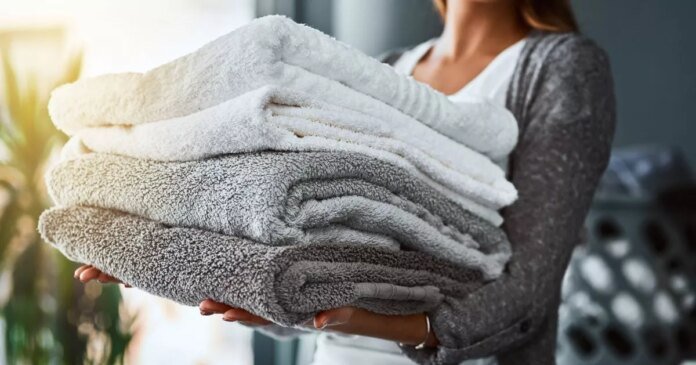

How frequently do you launder your towels? This question often sparks debate, as some individuals opt to wash them after each use while others extend the usage before tossing them in the laundry pile. Are you someone who tries to eke out another round of use before washing them?
Experts have now weighed in on this debate, shedding light on the recommended frequency for washing this commonly used bathroom essential. Surprisingly, recent survey results indicate that towels should be washed much more frequently than many people assume.
Clearance specialists at Clear It Waste conducted a study on household items that harbor more germs than a toilet seat, revealing that towels can be among the dirtiest items in a home.
It’s estimated that a home can host over 200,000 different microbe species, including bacteria and fungi, at any given moment. While the average household contains thousands of bacterial types, some everyday items are found to be dirtier than a toilet seat.
Partnering with Dr. Hana Patel, an NHS GP and GP Medico-Legal Expert Witness, Clear It Waste delved into the hidden bacteria issue and its potential health impacts, highlighting towels as a prime breeding ground for bacteria.
Studies indicate that a significant portion of individuals only wash their towels once a month, but this may not be sufficient according to the Daily Record. Bathroom towels left in warm, humid bathrooms provide an ideal environment for bacteria and mold to thrive.
Despite being used for drying hands, towels can harbor germs and mold due to their dampness, as explained by Dr. Hana Patel. Clear It Waste recommends washing shower towels at least once a week, approximately every three to five uses.
Dr. Patel stresses the importance of following this guideline even if towels appear clean. She warns about the potential health risks of mold exposure, which can lead to allergies, asthma, or hypersensitivity diseases.
Apart from towels, other items notorious for harboring more germs than a toilet seat include kitchen sponges. These sponges can accumulate thousands of bacteria, including harmful strains like E. coli and Salmonella, prompting the need for regular replacement every one to two weeks or when visibly worn.
Toothbrush holders and cases are also conducive environments for bacterial growth due to moisture retention. Toothbrushes placed in holders can foster mold development if not cleaned regularly, exposing them to airborne bathroom germs.
Dr. Patel advises that toothbrushes kept in open, dry conditions harbor fewer bacteria compared to those in closed, damp environments. To prevent mold and bacteria buildup, ensure toothbrushes are dry before placing them in holders and clean the holders routinely.
Reusable bottles are another culprit for bacterial breeding. These bottles, often damp from user saliva, food residues, and hand contact, require daily washing to prevent bacterial growth. Pay attention to cleaning hard-to-reach spots like straws and crevices where bacteria can thrive if overlooked.