
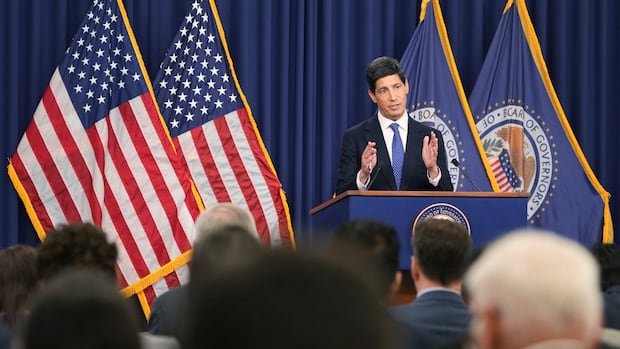

The Federal Reserve implemented its first interest rate hike since 2023 on Wednesday to combat persistent high inflation levels. This action raised the Fed’s key rate by a quarter-point to approximately 3.9%, which may lead to increased borrowing expenses for American mortgages, auto loans, and credit cards over time. Additionally, the Fed indicated in its quarterly projections that another rate hike to 4.1% is expected later this year.
Fed Chair Kevin Warsh, speaking at a news conference post-announcement, emphasized the ongoing challenge of inflation surpassing the Fed’s targeted two percent rate for an extended period. This rate increase marks a notable change in direction for Warsh, who, previously suggested a reduction in the key rate when under consideration by former President Donald Trump. Despite Trump’s expressed desire for lower borrowing costs, Warsh emphasized his independence as Fed chair during his nomination process.
The increase in gas prices due to the Iran war has contributed to a more than seven percent rise in average gas prices within a month, potentially fueling broader inflation. Recent inflation data revealed a 3.7% increase in July compared to the previous year, while strong retail sales growth in August indicated robust consumer spending levels, which could mitigate the impact of current interest rates on economic activity.
Although geopolitical uncertainties persist, the Fed noted the resilience of domestic spending, supported by ongoing consumer expenditure and substantial investments in AI data centers by major technology firms. Wall Street forecasts anticipate further rate hikes, with potential additional increases in December and March.
Contrary to the U.S. rate hike, economists suggest that Canada may not face immediate pressure to follow suit, as the two countries confront different economic challenges. While rising energy prices, influenced by the Iran conflict, have fueled inflation in Canada, the U.S. grapples with a more severe inflation scenario. Canada’s inflation measures are comparatively lower, and its economic conditions, including tariffs and unemployment rates, offer less urgency for rate adjustments. Economic forecasts project the U.S. to raise rates sooner than Canada, with potential Bank of Canada rate hikes not anticipated until 2027.