

Lady Gaga captivated a full house of 23,000 attendees at the Manchester Co-op Live Arena this week with her exceptional talent and vibrant performance. Meanwhile, just three miles away, in a lackluster venue, a different lady once hailed as gaga left the sparse audience yearning for bygone days.
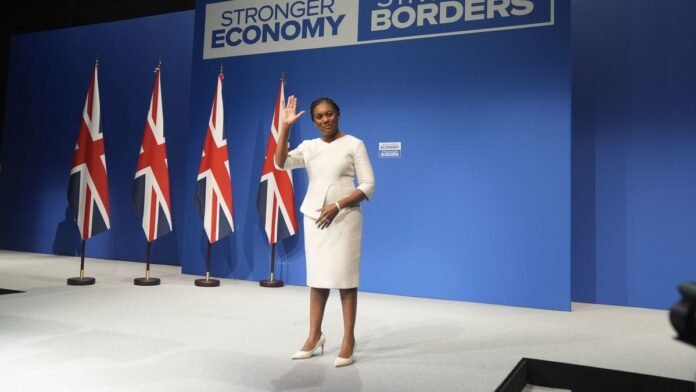
Lady Thatcher’s presence loomed over this year’s somber Tory conference like a ghostly figure. The entrance featured three glass enclosures displaying her iconic power suits, a large mosaic portrait of her, and a dedicated Thatcher Theatre. Various merchandise such as books, mugs, and Christmas decorations bearing her image were available for purchase, and nearly every speaker nostalgically referenced her past achievements.
The event exuded an almost excessive adoration for Thatcher, despite her passing 12 years ago, bordering on morbid fascination. The speeches delivered were lackluster, notably highlighted by Chris Philp’s unsuccessful attempts at humor that left the audience visibly uncomfortable. The overall messaging was marred by errors, including the misspelling of “Britain” as “Britian” on complimentary chocolate bars.
In a bid to counter dismal poll numbers aligning them with the Lib Dems, shadow ministers unveiled a series of impractical and unfunded policy proposals unlikely to materialize. These included controversial plans to target liberal judges, cut foreign aid, restrict human rights, conduct deportation raids on immigrants, and drastically reduce public sector services.
The party’s shift from following Boris Johnson’s leadership to embracing a Trump-like approach raised eyebrows, with critics questioning why these drastic measures were not implemented during their 14-year tenure, which resulted in economic stagnation and service breakdowns. Their rhetoric of “reclaiming the country” prompted skepticism regarding which era they aimed to return to, given their history of austerity, Brexit turmoil, and economic mismanagement.
Notably, the newly favored party leader, Robert Jenrick, sparked controversy by exploiting a visit to Handsworth in Birmingham, emphasizing a lack of diversity in the area. This move was interpreted as a calculated political maneuver, hinting at a troubling trend within the party leadership.
The Tories’ refusal to acknowledge their recent failures and instead glorify a divisive historical figure exemplifies their disconnect from reality and their constituents. This stubborn adherence to outdated ideologies and deceptive practices may seal their fate as a relic of the past, facing imminent irrelevance and public disdain.
The party’s dwindling support base is evident as activists gravitate towards alternative figures like Nigel Farage, signaling a shift in allegiance and disillusionment with the current leadership. As the party grapples with internal strife and external criticism, their future appears uncertain, with many predicting their eventual downfall and relegation to the annals of history.