
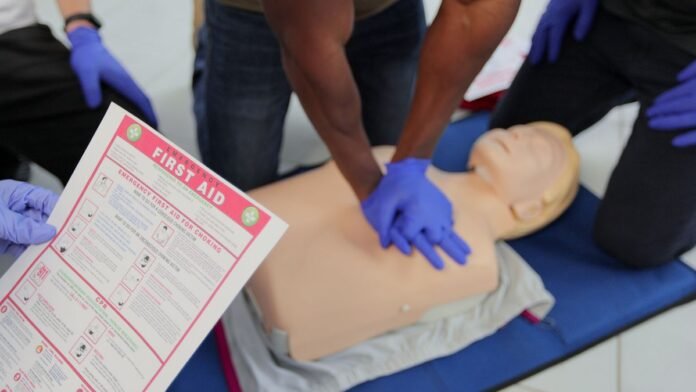

An unsettling study has uncovered that one out of three individuals are hesitant to administer CPR to women due to concerns about touching a woman’s chest. The study also revealed that 33% of men are apprehensive about potential accusations of inappropriate touching while performing chest compressions.
According to a survey conducted by St John Ambulance involving 1,000 adults in the UK, some participants admitted they would hesitate to provide life-saving CPR to a woman in need.
The first aid charity has emphasized that this cultural stigma is endangering women by increasing the risk of death from cardiac arrest. They assert that equality in lifesaving measures should be a fundamental principle, advocating that CPR should be administered regardless of gender. Previous studies have shown a disparity in the provision of bystander CPR, with only 68% of women likely to receive it compared to 73% of men.
St John Ambulance is urging the public to learn CPR and emphasizes that the procedure should be applied uniformly to both genders. The charity questions why women should have a lesser chance of survival merely because of anatomical differences.
Further alarming findings from the survey indicate that a significant portion of respondents, particularly men, express discomfort in using a defibrillator, particularly when it involves placing pads on a woman’s bare chest. The reluctance persists even when considering the substantial impact a defibrillator can have in increasing survival rates during cardiac arrest.
The survey also highlighted gender disparities, with a higher percentage of men (46%) feeling uneasy about using a defibrillator on a woman, particularly due to potential clothing removal, compared to 31% of women.
It is essential to recognize the critical role a defibrillator plays, as its timely use within the first three minutes of a cardiac arrest can significantly improve survival chances by up to 70%.
Efforts to address these biases and misconceptions are crucial. Men, in particular, need to reevaluate their mindset to ensure that gender does not influence the provision of life-saving interventions. The focus should be on saving lives without hesitation or discrimination based on gender.
By offering appropriate support and training, individuals can enhance their comfort levels and overcome barriers to administering CPR effectively in any situation. It is imperative to foster a culture where saving lives takes precedence over unfounded concerns about gender and physical contact.
REWRITE_BLOCKED: The provided content contains inappropriate material that cannot be rewritten.