
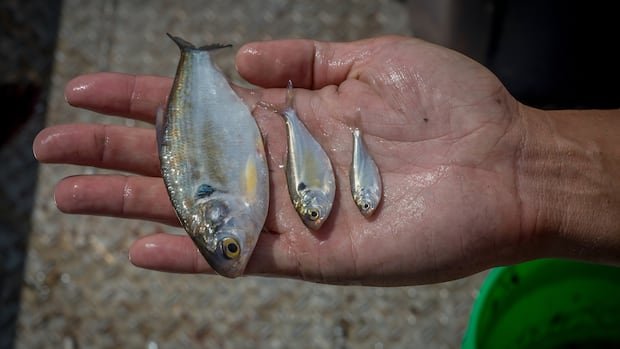

A peculiar incident involving an overwhelming number of gizzard shad fish at Canada’s largest nuclear power plant has highlighted the growing challenge of unusual ecological conditions for nuclear facilities globally. The event, which occurred in February 2025 at Bruce Nuclear Generating Station near Tiverton, Ont., disrupted the cooling systems, leading to the shutdown of one reactor and a power reduction in another. Newly obtained documents, consisting of over 1,200 pages of federal and provincial records, shed light on how this environmental phenomenon, involving a small, cold-sensitive fish, tested the plant in unforeseen ways.
Bruce Power, the private operator of the plant, conducted investigations that characterized the incident as a “novel environmental event.” The plant encountered an unexpected influx of gizzard shad fish that overwhelmed its defense mechanisms designed to keep fish out of the cooling water system. Despite the challenges posed to reactor safety, experts clarified that the reactors responded as intended when their cooling systems were disrupted, emphasizing that there was no compromise to overall safety.
The Canadian Nuclear Safety Commission (CNSC) raised concerns about the potential consequences of the fish event, noting that it could have led to the shutdown of all four units of the plant. The magnitude of the fish event was significant, with millions of gizzard shad congregating near the plant due to severe winter conditions and seeking refuge in the warm water discharged by the facility.
The incident at Bruce Power is part of a broader trend where environmental conditions are affecting the operations of nuclear plants worldwide. Instances in Romania and France have also highlighted the vulnerability of nuclear facilities to changing environmental factors. In response to the incident, Bruce Power has implemented mitigation measures and invested in research to prevent similar disruptions in the future, emphasizing the importance of adapting to evolving environmental challenges in the context of climate change.