

“Google Maps Updates Label Lake Ontario as ‘Lake America'”
The recent addition of “Lake America” labels on Google Maps has spurred U.S. President Donald Trump to urge Apple to make a similar change on iPhones. This situation underscores the reality that many Canadian consumers and businesses are heavily reliant on U.S.-owned platforms, with limited non-American alternatives available.
According to Anne Pasek, a Canada Research Chair at Trent University, Canadians often overlook the extent to which American tech monopolies dominate their digital lives and legal jurisdiction. Numerous Canadian websites, including federal government sites and major banks, have started displaying maps with Lake Ontario rebranded as Lake America.
The renaming of the Great Lake stemmed from an executive order by Trump amidst escalating trade tensions between the U.S. and Canada. Google implemented the change for U.S. users, offering non-American websites the option to display the original “Lake Ontario” label by adjusting their map settings to Canada.
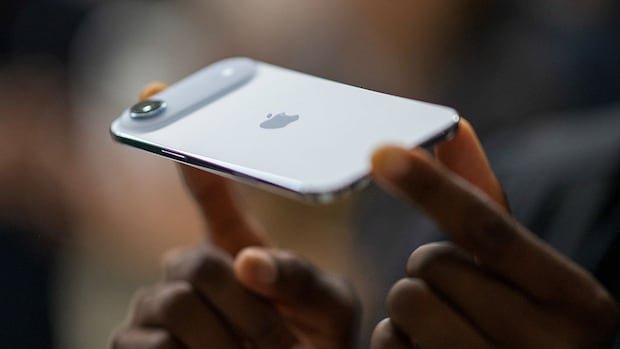
Despite Google’s explanation that the update aligns with their policy for differentiating water body names by country, U.S. Interior Secretary Doug Burgum disclosed that Trump has reached out to Apple to also adopt the Lake America label. Apple has not responded to inquiries from CBC News.
Apart from offering navigation services to millions, mapping tools by U.S. tech giants are deeply integrated into the operations of many Canadian businesses. These tools provide essential information like hours of operation, contact details, and reviews, while supporting functions such as address autocomplete on e-commerce platforms and traffic monitoring on ride-sharing apps.
Emily Osborne, a policy research associate at the Canadian Shield Institute, highlighted the reliance of Canadian digital services on American companies like Google and Apple. She suggested Dutch firms TomTom and HERE Technologies as potential alternatives for basic navigation needs.
Not long ago, Canada had its own mapping alternative in Avenza Systems, which was acquired by Blue Marble Geographics earlier this year. Osborne expressed concerns that the Trump administration might exploit other tech “choke points,” like payment processing and cloud storage, to exert pressure on Canada in the future.
She emphasized the vulnerability of Canadian businesses relying on U.S.-owned digital infrastructure, citing the impact of the AWS outage on numerous Canadian businesses last fall. Osborne underscored the lack of Canadian alternatives in critical areas such as credit card payments, currently dominated by Visa and MasterCard.