
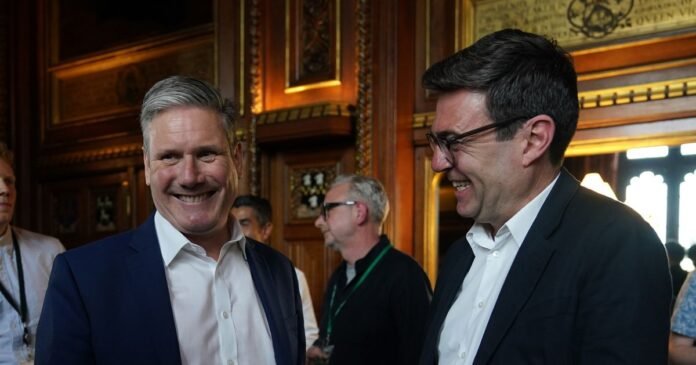

In the realm of politics, some liken it to a theatrical performance involving individuals who may not fit traditional beauty standards. However, a more apt comparison could be made to a wrestling match: intense, often scripted, and featuring characters who are not exactly paragons of societal norms.
The upcoming Labour Party Conference in Liverpool promises to be a showdown worth watching. On one side, we have Andy Burnham, known as the King of the North, the Mayor with distinct hair, and a prominent socialist figure. On the other side, we have Keir Starmer, dubbed Stumbling Starmer, the Prime Minister with borrowed spectacles.
With the absence of key figures like Red Ange, the prelude to the main confrontation will feature two women vying to outdo each other in northern credentials and advocating for the removal of the child benefit cap. While the prize may be uncertain, the audience’s reactions will reveal which contender garners more support for the main event.
Although public sentiment seems to favor Burnham over Starmer, the latter has made promises and strategic moves to maintain his position. Burnham’s popularity is undeniable, reminiscent of past leaders who held public adoration before assuming office. However, the transition to prime minister can alter perceptions significantly.
In the lead-up to the conference, Burnham has expressed commitment to his city while remaining open to new responsibilities. The decision to challenge Starmer’s leadership ultimately lies with the party membership, highlighting the internal dynamics at play.
Comparing the backgrounds of Burnham and Starmer reveals contrasting profiles. Burnham, with a political legacy and hands-on crisis management experience, exudes a relatable charm but faces past controversies. In contrast, Starmer’s legal background and recent political endeavors have failed to resonate with his party base, reflecting a broader but shallower support.
Both contenders would inherit a host of challenges if they were to become Prime Minister, including housing, economic, and international issues. As the political landscape evolves, their ability to navigate these complexities will be crucial.
The Labour Party Conference serves as a pivotal moment for shaping the party’s future direction. Starmer’s recent policy shifts, including the Hillsborough Law, indicate a willingness to adapt to public demands and potential challenges from opponents like Burnham.
As the conference approaches, the spotlight will be on Starmer to deliver a compelling vision and inspire confidence in his leadership. Meanwhile, Burnham’s strategy appears to focus on maintaining a positive image and readiness to step up if needed, positioning him as a viable alternative.
The dynamics within the Labour Party, especially concerning leadership decisions, present a complex narrative that could sway in either candidate’s favor. As the conference unfolds, the stakes are high for Starmer, with the potential for significant repercussions on his political future.
In the midst of this political drama, observers are advised to pay close attention to the unfolding events, as the outcome could have lasting implications for the party and the country at large. The upcoming conference is not just about speeches and policies; it’s a battleground where ambitions clash, alliances shift, and the future of leadership hangs in the balance.