

A recent incident involving a grizzly bear that gained widespread attention, along with recent research findings, are emphasizing the significance of keeping dogs on a leash while hiking.
A TikTok video circulating online in July has resulted in a woman potentially facing a fine of up to $25,000. The video, which garnered millions of views, captures a man wielding bear spray and shouting at a grizzly bear, while an unrestrained small dog moves between the man and the woman recording the scene.
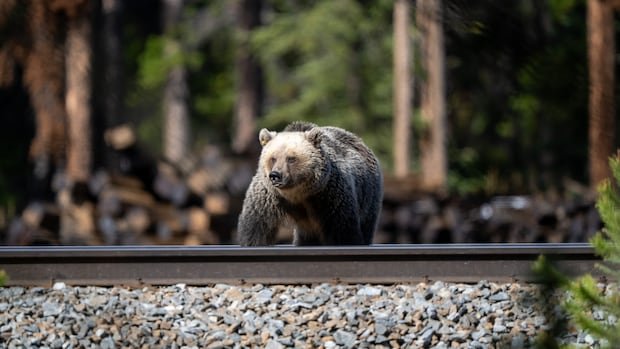
The footage features grizzly bear No. 142, a renowned female bear, ambling along the Taylor Lake trail in Banff National Park without displaying any signs of hostility.
The individual who filmed the video is set to appear in court in Canmore later this month.
A newly published peer-reviewed study titled “The Canine Conundrum: Is a Dog a Help or Hindrance in Bear Country?” delved into conflicts akin to those depicted in the video. The study examined 326 documented human-bear conflicts involving dogs from 1901 to 2023.
According to the study, 54 percent of the conflicts were instigated by dogs. Among the incidents analyzed in the study, five individuals and 56 dogs lost their lives, while 170 people sustained injuries.
Lana Ciarniello, a co-author of the study and an independent researcher, highlighted that hiking in a group with at least one other person reduces the likelihood of a negative bear encounter by 50 percent.
However, the study found that the presence of a dog increases the chances of a negative bear encounter, as it introduces a disruptive element into recreational activities, as noted by Ciarniello.
The study was prompted by a tragic event in 2023 when a grizzly bear in the Red Deer Valley area of Banff National Park fatally attacked two hikers and their dog.
The research underscored that human-bear conflicts not only impact individuals involved but also shape public perceptions of these essential ecosystem components, potentially influencing the future of bears.
Injuries were significantly more frequent among individuals with off-leash dogs compared to those with dogs on-leash, and encounters with bears were more prevalent with off-leash dogs.
Ciarniello expressed hope that individuals will adhere to on-leash dog regulations, which are mandatory in Canada’s national parks, and consider potential restrictions on dog access in critical grizzly bear habitats.
A report from Parks Canada wildlife experts recommended implementing “enhanced dog restrictions” across Banff National Park following the tragic incident in the Red Deer Valley area in 2023, where two hikers and their dog lost their lives.
The report suggested that Parks Canada should discourage visitors from bringing dogs to the park and critically reassess dog-related policies and regulations.
The presence of dogs was recognized as a significant risk factor for serious bear-human encounters and attacks, as per the report. Despite frequent wildlife encounters, compliance with leash regulations was found to be lacking.
The report cautioned that with increasing visitation, the foreseeable risk of negative dog-wildlife encounters is heightened. However, no immediate changes have been made based on the report’s recommendations.
The study pointed out that predatory grizzly bear attacks are uncommon, with a majority of human-bear conflicts occurring due to surprise encounters and a smaller percentage involving dogs.
Examples from U.S. national parks like Yellowstone, Grand Teton, and Glacier were cited, where dogs are not permitted on hiking trails or in the backcountry.
The report highlighted that existing legislation such as the Canada National Parks Act and the 2022 Banff National Park management plan do not guarantee public rights to have dogs in Banff National Park.
Kim Titchener, founder of Bear Safety & More, advised dog owners to assess their pets’ behavior around wildlife before venturing into such environments. She emphasized the importance of exercising caution and focusing on safety during bear encounters rather than filming for social media.
Titchener recommended maintaining calmness during bear encounters, prioritizing safety measures, and avoiding distractions like filming, which could jeopardize personal safety.
Overall, the study and expert recommendations underscore the necessity of responsible dog ownership, adherence to leash regulations, and the mitigation of potential conflicts between dogs, wildlife, and humans in natural habitats.