
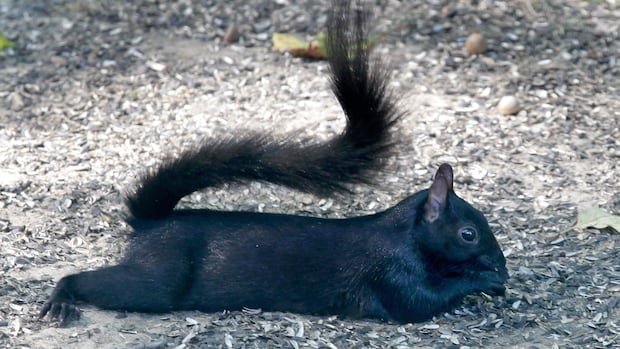

Francis Quang-Hai Dinh embarked on an intriguing summer mission during his first year at McGill University, exploring Montreal parks on his bicycle in search of squirrels. Venturing to nearly 200 green spaces spanning from Mirabel to Saint-Bruno, he meticulously observed and documented over 800 grey and black squirrels. What initially began as a simple undergraduate assignment evolved into a personal passion project aimed at unraveling the subtle evolutionary influences of the city’s layout and meandering watercourses.
Immersing himself in the study of these creatures, Dinh developed a newfound appreciation for their existence, acknowledging them not merely as pests but as integral wildlife inhabitants. Overcoming transportation constraints in suburban areas without a car and limited public transit options, Dinh extensively relied on his bicycle to conduct manual squirrel surveys across the region, a feat unmatched by other researchers.
His research unveiled a noteworthy trend regarding the prevalence of black squirrels in varying locations. While approximately 12% of Montreal’s squirrel population exhibited black coloration on average, the proportion of black squirrels significantly increased as he ventured further north. In areas just north of Laval, up to 40% of squirrels displayed black coats, with the percentage gradually decreasing on the island of Laval (20%), the island of Montreal (15%), and the south shore of Montreal (2-3%).
The study attributed these observations to several factors, with temperature playing a pivotal role. The cooler climates in northern regions favored the presence of black squirrels due to their enhanced heat-absorbing capabilities compared to their grey counterparts. Additionally, the density of forest cover contributed to the phenomenon, as black squirrels found better camouflage against darker backdrops created by denser tree canopies.
Allison Roth, the study’s senior author and an assistant professor at the University of Missouri, underscored the significance of using squirrels as a model to explore how urban environments drive evolutionary changes. Montreal’s unique environmental landscape, characterized by diverse neighborhoods, varying tree cover levels, and natural boundaries like the St. Lawrence River, presented a microcosm for observing genetic and physical adaptations within a single animal population.
Contrary to conventional beliefs attributing urban development as the primary driver of wildlife changes, the study emphasized the multifaceted nature of urbanization’s impacts. While urban sprawl alters local temperatures and diminishes tree cover, natural barriers such as riverways also influence evolutionary patterns. The research, published as part of a special feature by ecology journals, highlights the intricate interplay between environmental factors and wildlife adaptations in urban settings.
Reflecting on his research journey, Dinh expressed a profound shift in his perspective towards wildlife, recognizing the enduring presence of nature amidst urban modifications. The study’s findings not only shed light on the evolutionary dynamics of squirrels but also serve as a testament to the resilience and adaptability of wildlife in urban landscapes.