
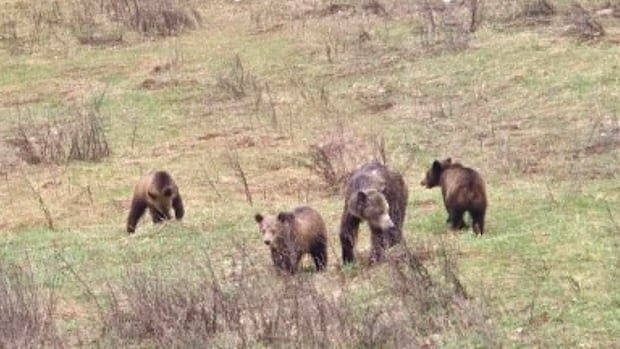

In an announcement on August 14, the B.C. Conservation Officer Service confirmed the euthanization of a mother grizzly due to public safety concerns arising from the animal’s loss of fear towards humans and food-focused behavior. The two remaining yearlings were safely relocated to an undisclosed location for continued monitoring.
A gathering took place in Nelson, B.C., to protest the decision to euthanize a young grizzly bear, a member of one of the two grizzly families frequently seen in and around Nelson. Katie Graves, founder of the Ursa Project Society, described the emotional rally where community members expressed sadness and solidarity.
Graves emphasized that the young grizzly, with a leg injury or deformity, was agile and able to keep pace with its family, questioning the necessity of its euthanization. The B.C. Conservation Officer Service defended its decision, citing the bear’s age, injury, and previous conflicts as factors that made rehabilitation or relocation unviable.
Despite community backlash against the bear’s death, some acknowledged the officers’ duty to protect public safety and highlighted the importance of responsible waste management to prevent bear-human conflicts. Wildlife biologist Clayton Lamb stressed the need for stronger policies to mitigate attractants that lure bears into urban areas, emphasizing the challenges of rehabilitating habituated bears.
The City of Nelson affirmed its commitment to wildlife conservation, implementing measures such as bear-resistant garbage cans and educational programs to minimize human-bear interactions. Bylaw services are actively enforcing regulations on waste management to safeguard both residents and wildlife.