
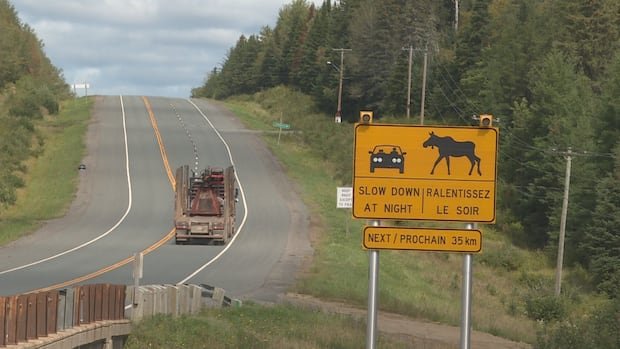

On a late August Saturday night, the Chaleur Lightning hockey team finished an exhibition game against the Miramichi Timberwolves and boarded their bus back to Bathurst. Assistant coach Alex Ouellet recalled hearing the bus driver gasp shortly after they began their journey. Within minutes, a collision occurred as the bus struck a moose on the highway. Fortunately, the team and coaches emerged unscathed, except for a few scratches on the driver.
The encounter left a lasting impression on Ouellet and the team, reminiscent of other New Brunswickers who have faced similar encounters with wildlife. This incident prompted a reflection on road safety, especially during evening and nighttime travels.
Coincidentally, the province announced the addition of two new wildlife crossings on the same highway where the collision took place. These wildlife tunnels are part of the province’s measures to prevent large animals, such as moose, from venturing onto roadways.
Transportation Minister Chuck Chiasson explained that the placement of wildlife fencing and crossings is determined based on collision data analysis to identify high-risk areas. While extensive wildlife fencing lines both sides of 331 kilometers of New Brunswick highways, it is acknowledged that creating barriers without impeding animals’ natural movements is essential.
New Brunswick currently boasts 82 wildlife crossings, including two recent installations on Route 8 between Miramichi and Bathurst. These tunnels, over four meters tall and wide, are designed to be easily accessible for various wildlife species, as observed in previous studies conducted on similar structures.
According to wildlife ecologist Graham Forbes, who led earlier research, the effectiveness of wildlife tunnels lies in their intuitive design, guiding animals safely to pass beneath highways. While the tunnels primarily cater to large mammals like moose, other wildlife, including beavers, ducks, and bats, have been observed utilizing these passages.
Despite the presence of wildlife tunnels, the Department of Transportation has not observed a significant decrease in collisions. The focus remains on enhancing road safety through mitigation strategies and constant evaluation of collision data. Chiasson emphasized the importance of implementing measures to reduce collisions and ensure safer travel conditions for motorists.
Looking ahead, Ouellet expressed hope for increased fencing in the area, acknowledging the challenges of preventing every wildlife-related accident. While recognizing the limitations, efforts to enhance preventive measures and road safety initiatives remain a priority for all stakeholders involved in wildlife collision prevention.