
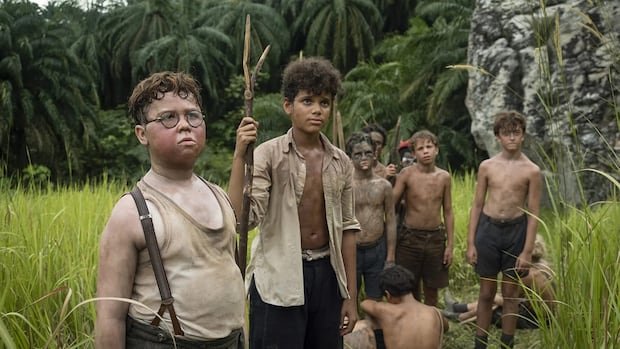

A new four-part adaptation of William Golding’s 1954 novel “Lord of the Flies” revisits the journey from schoolboy order to island chaos, offering a deeper look into the boys’ backgrounds prior to their isolation. Scripted by Jack Thorne, known for his work on the series “Adolescence,” and helmed by award-winning filmmaker Marc Munden, the series is a collaborative effort between Eleven, One Shoe Films, and Sony Pictures Television for BBC iPlayer, BBC One, and Stan.
The narrative unfolds with a group of British schoolboys stranded on an uninhabited island following a plane crash. As Ralph strives to maintain order, Jack lures the boys into a world of hunting and power struggles. Unlike previous adaptations that deviated significantly from the original material, this miniseries brings the characters back to their British schoolboy origins in the early 1950s. Here are key insights into the new series:
1. Embracing the Novel’s Historical Context:
In contrast to the 1990s film, which transplanted the story to the late Cold War era with American military cadets, the 2026 adaptation stays faithful to Golding’s portrayal of British schoolboys in the aftermath of World War II. This setting underscores how their upbringing influences their actions, challenging simplistic interpretations of innate savagery.
2. Humanizing Piggy:
In this rendition, the character known as “Piggy” in the novel and previous adaptations is revealed to be named Nicholas or Nicky, portrayed by David McKenna. The evolving relationship between Ralph (played by Winston Sawyers) and Piggy adds layers to their dynamic, highlighting Piggy’s role as a voice of reason amidst chaos.
3. Diverse Identity of Ralph:
Ralph is depicted as mixed-race in this version, with a black mother and a white military father. This alteration enriches Ralph’s struggles to maintain authority within the group, showcasing his unwavering commitment to his values even in the face of adversity.
4. Exploring Character Histories:
Unlike the action-driven approach of the 1990 film, the miniseries delves into the backstories of key characters through flashbacks. These flashbacks illuminate the troubled family dynamics that shape Jack, Simon, Piggy, and Ralph, offering a nuanced portrayal of their inner conflicts.
5. Social Dynamics and Power Struggles:
The series emphasizes the visual hierarchy within the group, using the choir’s distinct uniforms to symbolize power dynamics. Jack’s allure of excitement over Ralph’s stability underscores the tension between leadership styles and the allure of rebellion.
6. Absence of Adult Influence:
In a departure from the 1990 film, the new adaptation removes the presence of an adult pilot, leaving the boys to navigate their challenges independently. The absence of external authority underscores the internal conflicts and fears that drive their descent into savagery.
7. Evocative Visual Aesthetics:
The series opts for a darker, more unsettling visual tone, drawing on the lush Malaysian rainforest as a backdrop. Through innovative cinematography techniques, the adaptation conveys a sense of disorientation and impending darkness, mirroring the characters’ emotional turmoil.
As the miniseries unfolds, it serves as a cautionary tale about the impact of adult behavior on children and the consequences of unchecked influences. “Lord of the Flies” premieres on CBC Gem on October 22, with subsequent weekly broadcasts on CBC TV.