

The age-old query of high-quality dramas persists. Is there a genuine necessity for another historical drama? Is there a genuine necessity for yet another screen adaptation of Jane Austen’s work, particularly Sense and Sensibility?
For viewers acquainted with Ang Lee’s 1995 rendition of Sense and Sensibility, the inquiry may come across as pointed. Austen’s complete repertoire has been translated to screen, with Sense and Sensibility alone having seen no less than five prior adaptations.
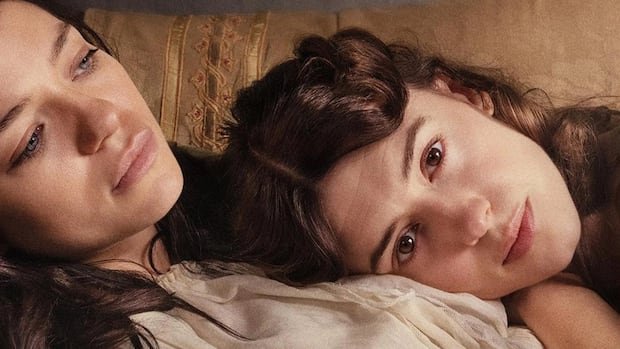
Now, director Georgia Oakley presents her rendition of Sense and Sensibility, set to debut in theaters on October 16. Featuring Daisy Edgar-Jones as Elinor Dashwood and Esmé Creed-Miles as her sibling Marianne, and scripted by Diana Reid, this iteration refrains from attempting to outdo the romance of the 1995 film.
Instead, it delves deeper into the emotional bond between the sisters and the financial instability that constrains their options.
Following their father’s demise, the Dashwood estate transitions to their half-brother, leaving the women with meager financial stability and necessitating a move to a more modest dwelling. In Austen’s era, women’s futures hinged significantly on the benevolence of male relatives or the security of marriage, rendering this sudden loss of status and stability especially precarious.
The film’s visual narrative evolves with the characters: departing from the refined elegance of the drawing room to the rugged countryside, amidst inclement weather, mud, and untamed fields.
They engage in gardening, take leisurely strolls, frolic on the beach, and navigate through ponds. While Elinor finds solace in sketching and skimming stones, Marianne often lounges in fields, gazing at the sky.
This rawer setting renders their vulnerability tangible, in addition to financial, highlighting their shared ordeal.
Elinor’s composure may mask her profound emotions, whereas Marianne’s candidness exposes her to potential heartache. Throughout the film, circumstances prompt each of them to view the world through the other’s eyes.
“The predominant focus of the love story is on the two girls,” Edgar-Jones remarked on Oakley and Reid’s perspective. Collaborating with her longtime acquaintance Creed-Miles felt seamless, she mentioned to CBC News.
“I had a preconceived notion of who I thought Elinor was, but it wasn’t until I enacted those scenes with Esmé’s Marianne that I truly comprehended her,” she disclosed.
Creed-Miles emphasized how their friendship swiftly fostered a “familial, sisterly, best friend sort of energy,” underscoring that she could not have navigated the project without Edgar-Jones’s encouragement.
The sisters serve as each other’s confidantes, critics, and pillars of support.
Canadian writer Natalie Jenner, whose book The Jane Austen Society draws from Austen’s legacy, perceives this bond as a pivotal reason for the enduring popularity of the novel.
“If your familial ties are robust, you feel empowered to confront anything,” Jenner asserted. “The sisters are the constant. That sense of steadfastness and a guiding light is something you can always return to. I believe it resonates with a contemporary yearning for community and stability,” she informed CBC News.
The male characters in the new film deviate from the established archetypes in Ang Lee’s 1995 adaptation.
Herbert Nordrum elucidated in an interview with CBC News that he portrayed Colonel Brandon as socially awkward and enigmatic, focusing on the character’s internal turmoil in expressing his sentiments. This contrasts with Alan Rickman’s 1995 portrayal, which imbued Brandon with a sense of gravity and an unwavering devotion to Marianne conveyed through subtle yet impactful gestures.
In the 1995 adaptation, Greg Wise embodied Willoughby as a charismatic romantic figure, intensifying the shock of his betrayal. In the 2026 rendition, Frank Dillane revealed to CBC News his intention to accentuate Willoughby’s endearing traits – “his joy, exuberance, zest for life, poetry, and romance” – while still allowing his questionable deeds to speak for themselves. Dillane aimed to depict him as a multi-dimensional young man prone to errors and falling in love.
He humorously remarked that Willoughby’s grand romantic gestures would now be termed “love bombing,” while his tendency to ignore Marianne’s letters mirrors the period-drama equivalent of