
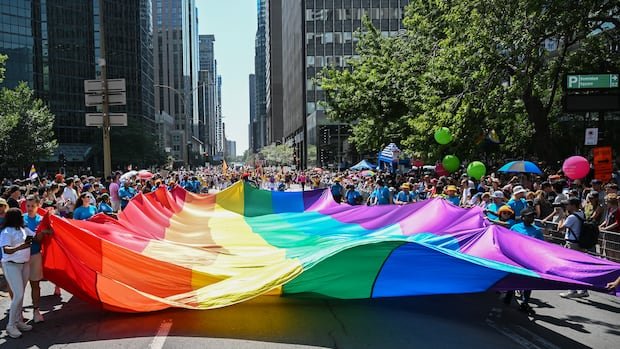

As Quebec celebrates pride month, political candidates from diverse sexual and gender backgrounds running in the upcoming provincial election are raising concerns about a surge in hateful messages directed at them. Québec solidaire has reported a significant increase in online hate targeting its 2SLGBTQ+ candidates.
Roxane Milot, the party president and a candidate in Montreal, expressed worries about the escalating online violence faced by marginalized candidates, which she believes could deter individuals from diverse backgrounds from participating in politics. Milot, who identifies as bisexual, highlighted the challenges faced by queer, women, and racialized individuals in entering politics due to the worsening situation of online hate in Quebec.
Recently, Milot herself became a target of hateful messages and online trolls. Another incident involved Vanessa Durand, a Québec solidaire candidate, who withdrew from the election after making derogatory remarks online against Parti Québécois supporters from 2SLGBTQ+ communities. Durand later apologized and retracted her candidacy.
Philippe Schnobb, a Parti Québécois candidate, revealed that he regularly receives homophobic hate messages, including threats, since entering politics. Despite facing intolerable remarks, Schnobb expressed reluctance to pursue legal action at the moment, emphasizing the need to address personal and sensitive issues calmly in the lead-up to the election.
The issue of homophobic and transphobic comments extends across all major political parties, according to Philip Laflamme, a senior adviser for the Liberal party. Even candidates who are not part of the sexual and gender diversity community can be targets of such insults. Parties like the Liberals and Coalition Avenir Québec have taken steps to monitor candidates’ social media accounts closely and condemn any form of attacks.
Quebec Conservative Party Leader Éric Duhaime, who is openly gay, has also been subjected to hateful online comments but has chosen not to amplify them. Parties have implemented support systems and training programs to assist candidates in handling online violence effectively, aiming to provide a safe environment for all individuals participating in the political process.