

Mayors from major cities in Ontario are reiterating their request for increased assistance from both provincial and federal governments to address issues related to homelessness, addiction, and mental health.
This appeal was made during the recent Association of Municipalities of Ontario (AMO) Conference held in Ottawa over the weekend.
According to Marianne Meed Ward, who chairs Ontario’s Big City Mayors (OBCM) and serves as the Mayor of Burlington, “The crisis regarding homelessness, mental health, and addictions is worsening in communities throughout the province, and maintaining the current approach is not viable.”
Meed Ward emphasized that municipalities are “ready to contribute, but we need other governmental levels to take decisive action.”
The OBCM comprises 29 single and lower-tier municipalities with populations exceeding 100,000, representing nearly 70 percent of Ontario’s total population, as stated on their official website.
Since the launch of the Solve the Crisis Campaign in 2024, the organization has been advocating for more tools and resources from both the provincial and federal governments.
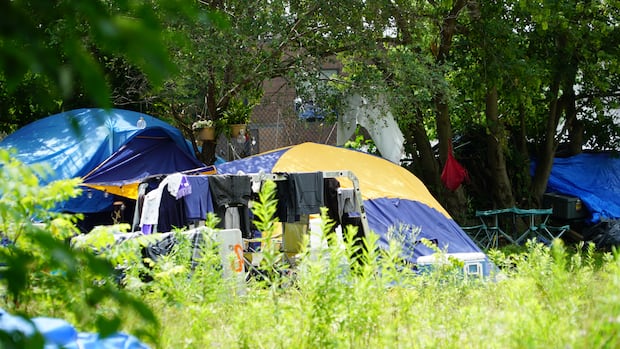
This renewed plea coincides with a rise in homelessness in the province and the challenges many municipalities face in addressing homeless encampments in public areas.
In a video promoting the OBCM campaign, Meed Ward acknowledged some positive developments from the province but stated that municipalities have “reached their limits,” and the increasing expenses related to health care, housing, and social services can no longer be sustained by property taxes.
The campaign urges the province to declare a state of emergency regarding the crisis, significantly increase investments in recovery-based treatments, and appoint a dedicated minister to oversee mental health and addiction issues.
“The challenges and solutions span across 16 different ministries, which is why it’s crucial to have a single point of contact who can champion this cause and drive it forward,” commented Waterloo Mayor Dorothy McCabe to CBC News.
Furthermore, the campaign advocates for the enhancement of addiction treatment and rehabilitation programs within provincial and federal correctional facilities.
‘Involuntary care doesn’t work’: Canadian Civil Liberties Association
Additionally, the campaign seeks a re-evaluation of the province’s Mental Health Act and the Healthcare Consent Act, aiming to develop a more “compassionate care and intervention model” for individuals, including those who may lack the capacity to consent to treatment while ensuring their rights, dignity, and well-being are preserved.
Harini Silvalinga, the quality director at the Canadian Civil Liberties Association, expressed to CBC News that this approach could potentially result in compulsory treatment for certain individuals if Ontario adopts models similar to those implemented in British Columbia and Alberta.
“Involuntary care has not been proven effective in addressing the underlying causes of substance use and addiction, and it often exacerbates crises,” she stated.
“We firmly oppose these so-called compassionate intervention laws. They are not compassionate; they represent enforced treatment regulations that undermine individuals’ autonomy and decision-making abilities.”
Silvalinga pointed out that the closure of safe consumption sites has “worsened the situation” and advocated for the re-establishment of such support services, along with more comprehensive community health treatments and housing solutions.
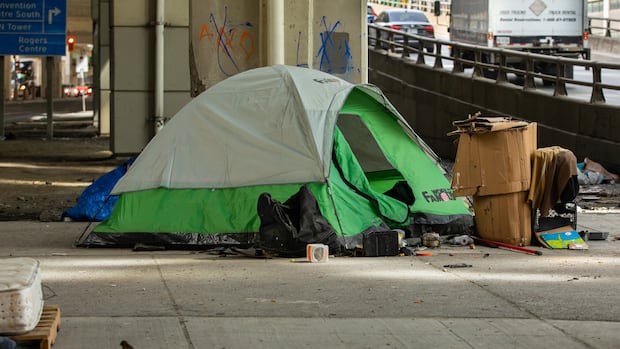
Homelessness has more than doubled in Toronto since 2021, according to a new report. As CBC’s Britnei Bilhete explains, the report is calling the situation a crisis that no single government or sector can address alone.
‘Compassion and accountability must go hand in hand’
Cambridge Mayor Jan Liggett expressed her support for the OBCM’s request in a statement on Sunday.
“I have heard numerous accounts from residents in Cambridge about relatives falling through the cracks of a system that is ill-equipped to handle the scale of the challenges we are facing,” she remarked.
Liggett affirmed that she and her team will persist in urging the province to “shift from mere reaction to proactive recovery and provide the coordinated actions that communities throughout Ontario require.”
A representative for Minister of Health Sylvia Jones stated that the province has allocated an additional $560 million to establish 29 new Homeless and Addictions Recovery Treatment (HART) Hubs and has contributed $3.8 billion towards the Roadmap to Wellness, which aims to create a “comprehensive mental health and addiction system.”
The spokesperson noted that the province has also introduced 500 new addiction recovery beds and over 1,200 supportive housing units statewide.
Alex Nuttall, vice-chair of OBCM and mayor of Barrie, remarked in a statement that “compassion and accountability must go hand in hand.”
“This entails broadening access to housing, mental health care, and rehabilitation while ensuring that parks, sidewalks, and public areas remain safe and accessible for all,” he added.