

Ottawa has announced what it describes as the most significant clean energy investment ever made in North America.
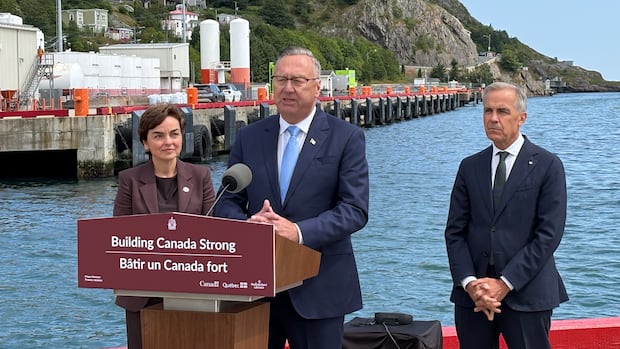
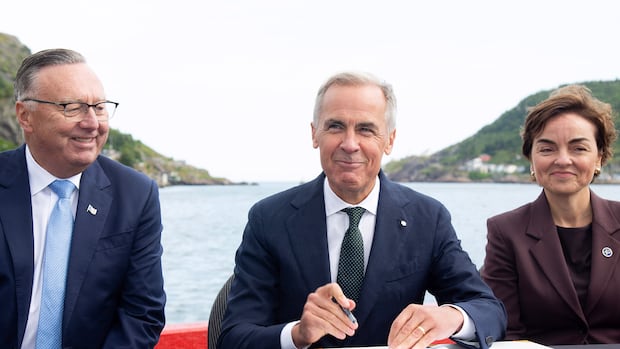
On Monday, Prime Minister Mark Carney visited St. John’s to unveil a new agreement concerning Churchill Falls and other electricity initiatives in Labrador, accompanied by Newfoundland and Labrador Premier Tony Wakeham and Quebec Premier Christine Fréchette.
“We are finally moving past one of the darkest periods in our history, replacing the infamous 1969 Churchill Falls agreement and the 2024 memorandum of understanding with a more favorable arrangement for everyone involved,” stated Wakeham.
The leaders convened at Pier 17, set against a scenic ocean backdrop, to share details about the new agreement.
Ottawa is set to invest $10 billion to enhance and expand the Churchill Falls generating station, develop the Gull Island hydroelectric project, construct transmission lines, and implement a 2,000 MW onshore wind energy initiative in Labrador. The specific location and additional details for the wind project are currently under consideration by Newfoundland and Labrador Hydro.
The federal government claims that collectively, these initiatives amount to the largest clean energy investment in North America, valued at nearly $70 billion, and will nearly triple the existing generating capacity of Churchill Falls—enough power to supply electricity, heating, and cooling for all homes in Toronto, Montreal, and Vancouver combined.
“To put this in perspective, tripling the current generation capacity of Churchill Falls to 14,000 megawatts of renewable energy exceeds the total generating capacity of B.C. Hydro and is more than double the output of Bruce Power, the largest nuclear facility on the continent,” Carney remarked.
According to both levels of government, the projects will generate approximately 23,000 jobs.
The agreement will provide Quebec with a much-needed reliable power source while Newfoundland and Labrador aims to generate additional revenue from its natural resources amid significant debt challenges.
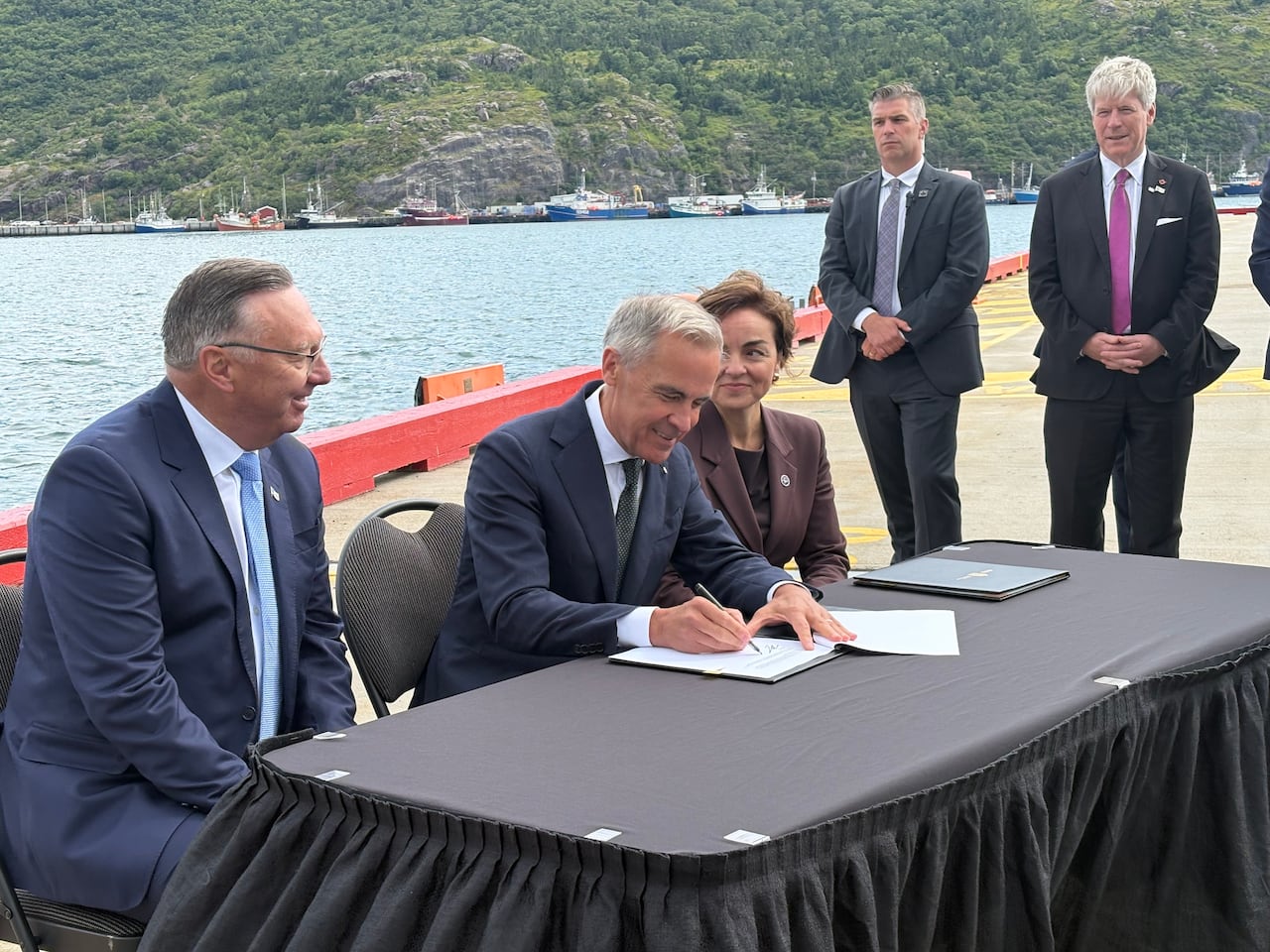
Prime Minister Mark Carney signing a letter in St. John’s on August 17, 2026, outlining Ottawa’s commitments to the Churchill Falls projects. (Juanita Mercer/CBC)
The initiative also aims to assist residents of Newfoundland and Labrador in reducing their electricity expenses.
A new 15 percent rebate will be offered to all N.L. ratepayers on their first 2,000 kWh of electricity consumed each month. Wakeham indicated that this would result in an average annual savings of $351 for households.
Wakeham considers the agreement a ‘win-win-win’
The new tentative agreement between Newfoundland and Labrador Hydro and Hydro-Quebec features updated figures compared to the 2024 memorandum of understanding signed by the previous Liberal administration in N.L.
N.L. Hydro reports that the new deal raises the estimated value for N.L. from $36 billion in the 2024 MOU to $49 billion in net present value.
This agreement will remain in effect until March 31, 2027, unless both parties mutually decide to adjust the date or finalize definitive agreements before then.
Upcoming elections in Quebec could introduce complications if a different party assumes power, but for now, Wakeham is referring to it as a “win-win-win.”
He emphasized that this ensures N.L. receives more power, greater value, and increased transmission—something he has consistently highlighted when discussing N.L.’s negotiations with Quebec regarding the Churchill River hydroelectric projects.
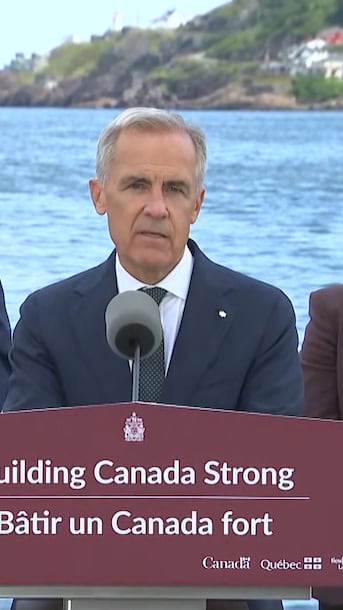
Following the announcement of a new Churchill Falls hydroelectric agreement between Newfoundland and Quebec, Prime Minister Mark Carney stated that Ottawa will contribute $10 billion in federal financing to upgrade and expand the project. The funds will be allocated for enhancing and expanding the generating station, constructing transmission lines, establishing offshore wind turbines, and developing the Gull Island hydroelectric project.
The agreement guarantees 985 megawatts of transmission access through Quebec, allowing Newfoundland and Labrador to sell electricity from the Churchill River by utilizing Hydro-Quebec’s transmission network to reach other markets.
For instance, if Massachusetts or New York requires electricity, Newfoundland and Labrador could supply it.
The previous Churchill Falls memorandum of understanding lacked any guarantees for transmission access, meaning that Quebec would have first priority to any energy designated for N.L. but not utilized within the province.
“Finally, Newfoundlanders and Labradorians will be the primary beneficiaries of our resources, having complete authority over whether to utilize our power for local development or sell it to external markets,” Wakeham asserted.
“Today is about what we can build, not what we can tear down,” he remarked, seemingly referencing the 2024 announcement with Quebec when former N.L. Premier Andrew Furey annulled the 1969 Churchill Falls agreement.
Locally, the original contract has faced long-standing criticism for being excessively favorable to Quebec.
During his campaign last fall, Wakeham promised to present the new agreement to a referendum. On Monday, he announced he would instead hold a special session of the House of Assembly on September 14.
Wakeham expressed that the decision to forgo a referendum was challenging, acknowledging that many might feel “disappointed” by his change in plans, but he insisted, “the time is now, the urgency is real.”
Increased power and revenue for N.L.
While the earlier memorandum of understanding included a commitment to expand Churchill Falls by adding a new powerhouse adjacent to the current facility, the new agreement does not offer a definitive plan.
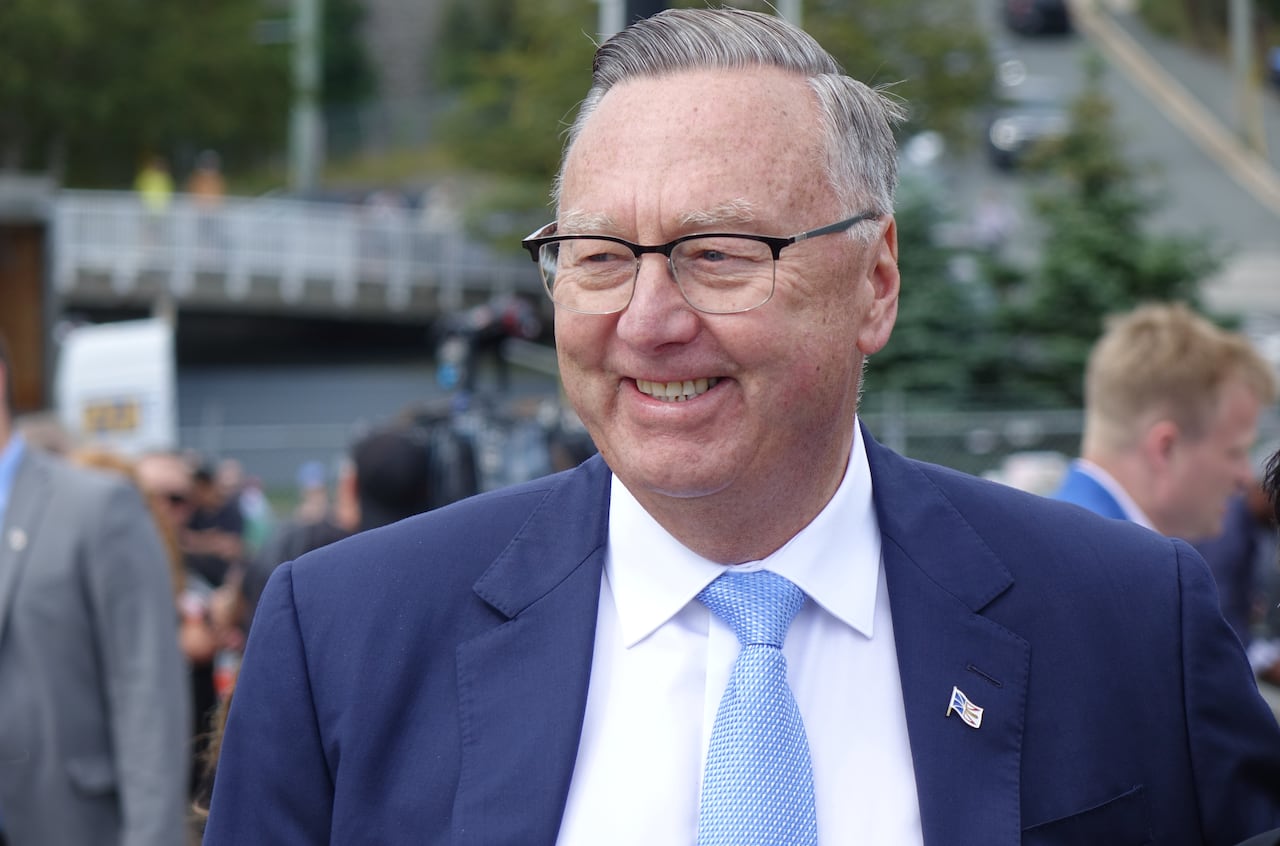
Newfoundland and Labrador Premier Tony Wakeham describes the new tentative agreement as a “win-win-win” for all stakeholders. (Patrick Butler/Radio-Canada)
Ottawa has stated it can provide funding for such an expansion, but the new agreement between N.L. and Quebec stipulates that they will only explore the “potential” for such an expansion.
Nonetheless, the new deal encompasses upgrades to the existing facility, resulting in a 23.5 percent increase in capacity, equivalent to 1,275 MW. The 2024 memorandum of understanding had previously estimated those upgrades at 550 MW.
In total, N.L. Hydro indicates that Newfoundland and Labrador will secure approximately 760 MW more power through this agreement—2,350 MW compared to the 1,990 MW in the 2024 MOU. If the wind project is completed, this figure could rise to 2,750 MW.
Hydro-Quebec will have access to up to 6,915 MW, or as much as 8,515 MW if the wind project is finalized.
N.L. Hydro reports that Hydro-Quebec will pay 1.8 cents per kilowatt-hour next year, increasing from the current rate of 0.2 cents, with an annual rise of 14 percent leading to 11.5 cents by 2041.
Ottawa will now also back a loan guarantee for the construction costs of Gull Island, which Carney noted will be part of a new Atlantic energy strategy under the Major Projects Office.
The agreement also mentions the study of a new wind generation facility, although specific details are sparse.
In his address, Carney announced that the federal government would invest alongside the Innu Nation in a wind project in Labrador and assist in financing new transmission lines.
“Indeed, we cherish these windswept lands,” Carney remarked, referencing the provincial anthem of Newfoundland and Labrador.
Expansion of mining projects in Labrador
Ottawa indicates that the additional power will contribute to the growth of the mining sector in Labrador, and is providing funds to support that development.
Quebec and Newfoundland and Labrador have established a new energy-sharing agreement that will nearly triple the current generating capacity of the Churchill Falls hydroelectric facility.